


Lilikoi flavor is the vibrant, sweet-tart taste of Hawaiian passion fruit, characterized by a sharp, citrusy punch, intense floral aroma, and a rich, honey-like finish. Often described as a bold fusion of guava, mango, and tart pineapple, this tropical profile delivers an unforgettable sensory balance of high acidity and natural sweetness.
When founders and product developers ask what is lilikoi fruit, they are usually looking beyond basic agriculture. They want to understand why this vibrant Hawaiian staple commands such an immense, premium appeal across culinary, beverage, and aesthetic lifestyle markets. Most name lists and ingredient breakdowns fail because they treat lilikoi like a standard passion fruit. They ignore the deep cultural heritage, distinctive sensory psychology, and high-value brand positioning that the name itself carries.
Let’s break it down simply. No fluff, just facts.

The Sensory Profile: Break Breakdown of Lilikoi Flavors
To craft an iconic product line, lifestyle collection, or brand identity around this exotic profile, you must understand its distinct variations. Here is how lilikoi breaks down across different taste, color, and aesthetic categories:
- Yellow Lilikoi (Passiflora edulis f. flavicarpa) | Electric, sharp, deeply tart with citrus undertones | Best For: Energy drinks, craft cocktails, high-impact branding
- Purple Lilikoi (Passiflora edulis) | Milder, richer sweetness with subtle floral aromas | Best For: Artisanal jams, boutique skincare, luxury candles
- Lilikoi Cream (Syrup Blend) | Smooth, velvety, tropical indulgence with balanced acidity | Best For: Gourmet desserts, luxury bath products, dessert syrups
- Lilikoi Sparkle (Infused Hydration) | Crisp, effervescent, refreshing botanical finish | Best For: Sparkling waters, wellness elixirs, functional beverages
- Golden Nectar Lilikoi | Honeyed, rich, complex tropical sweetness | Best For: High-end perfumes, premium spirits, resort lifestyle concepts
Linguistic & Naming Psychology: Why Lilikoi Captivates Consumers
Here’s where most founders get it wrong: they assume “lilikoi” is just another synonym for passion fruit. In reality, the term carries powerful linguistic and psychological triggers that drastically elevate perceived brand value.
Phonetically, the word lilikoi uses repeating liquid consonants (‘l’) and bright, open vowel sounds (‘i’ and ‘oi’). In sensory marketing and brand naming psychology, these phonetic structures create an immediate feeling of smoothness, fluidity, and tropical freshness.
When consumers hear or read the term, their brains instantly link it to three core emotional triggers:
- Exotic Prestige: Unlike generic passion fruit, lilikoi carries a direct cultural link to Hawaiian heritage, evoking images of untouched tropical luxury, sun-drenched coastlines, and premium quality.
- Sensory Contrast: The unique balance of sharp tang and deep sweetness creates a dynamic taste perception, making the product feel energetic rather than flat.
- Aesthetic Minimalism: In digital content, consumer packaged goods (CPG), and brand messaging, the word looks sleek, modern, and high-end.
Lilikoi Flavor & Brand Attributes Matrix
| Profile Variant | Meaning / Vibe | Ideal Industry / Brand Fit |
| Yellow Hawaiian Lilikoi | Tangy, vibrant, high-energy tropical zest | Functional Beverages, Craft Sodas, Activewear |
| Sweet Purple Lilikoi | Subtle, aromatic, refined island elegance | Premium Skincare, Artisanal Edibles, Boutique Beauty |
| Lilikoi Butter / Cream | Decadent, smooth, warm island comfort | Gourmet Food Products, Body Butters, Bakery Lines |
| Infused Lilikoi Botanicals | Clean, crisp, herbal tropical fusion | Wellness Elixirs, Luxury Spa Products, Hard Seltzers |
Common Pitfalls When Using Lilikoi in Products & Branding
Launching a product line or naming a brand around this exotic profile comes with specific challenges. Avoid these common mistakes:
- Confusing Lilikoi with Generic Passion Fruit: While scientifically related, using generic passion fruit visual cues loses the premium Hawaiian storytelling edge that the specific name offers.
- Overwhelming the Acidity Balance: Formulators often add too much sugar, masking the signature tart bite that defines authentic lilikoi fruit flavor.
- Trademark and Phonetic Friction: Ensure your brand domain, product name, and trademark registrations do not conflict with existing Hawaiian regional designations or established beauty trademarks.
- Scaling Bottlenecks: Sourcing authentic Hawaiian lilikoi puree or essential oils requires clear supply chain planning compared to mass-market tropical concentrates.
Strategic Selection Framework: Validating Your Lilikoi Concept
If you are using this profile for product development, brand identity, or naming, follow this four-step strategy to test and validate your concept:
- Map the Target Vibe: Determine whether your brand leans toward high-energy refreshment (Yellow Lilikoi) or serene, luxury wellness (Purple Lilikoi).
- Audit Phonetic Fit: Test your product name out loud alongside the term. It should flow effortlessly without hard verbal stops.
- Verify Semantic Search Intent: Align your digital content with related tropical entities like guava, lilikoi syrup, Hawaiian passion fruit, and botanical extract.
- Test Sensory Perception: Conduct blind tasting or scent testing to confirm your formulation delivers the signature sweet-tart balance rather than a generic tropical mix.
Frequently Asked Questions
What does lilikoi taste like?
Lilikoi has a bold, sweet-tart flavor profile with strong citrus and floral notes. It combines the sharp acidity of a lime or lemon with the tropical richness of guava, mango, and classic passion fruit.
What is lilikoi fruit compared to regular passion fruit?
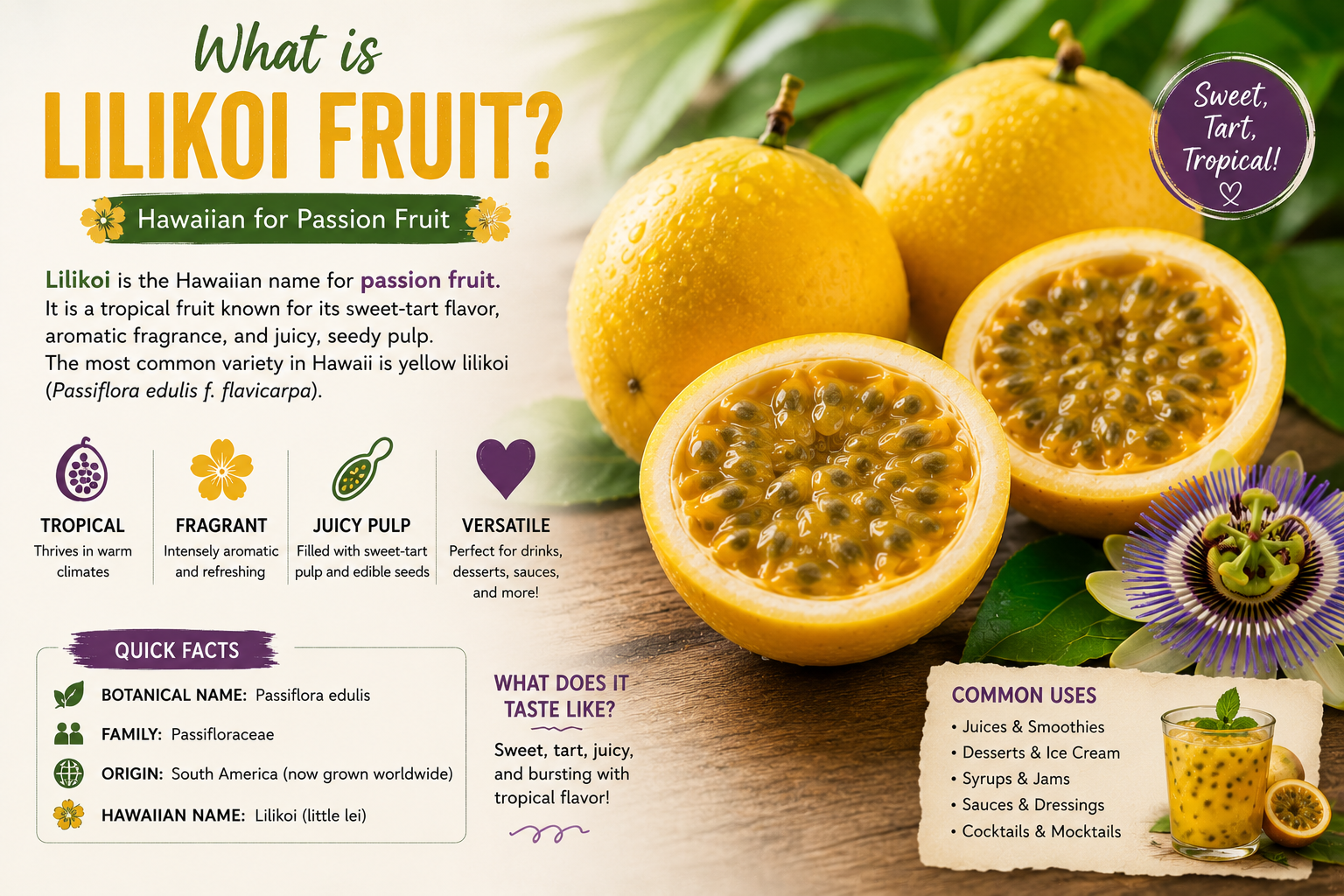
Lilikoi is the Hawaiian name for passion fruit, most commonly referring to the yellow variety (Passiflora edulis f. flavicarpa). Yellow lilikoi is typically larger, more acidic, and more intensely aromatic than standard purple passion fruit.
How is lilikoi flavor used in food and drinks?
Lilikoi flavor is widely used in tropical jams, lilikoi butter, shaved ice syrups, craft cocktails, sparkling waters, and bakery desserts. It is also a popular aromatic profile in tropical skincare, lip balms, and candles.
Is lilikoi sweet or sour?
Lilikoi is both sweet and sour. It features a sharp, vibrant acidity on the first taste, followed by a rich, honeyed, floral sweetness as it settles on the palate.
The 1-Rule Golden Takeaway
When leveraging lilikoi, never settle for generic tropical positioning—build your identity around its signature sweet-tart balance and authentic island prestige.


