
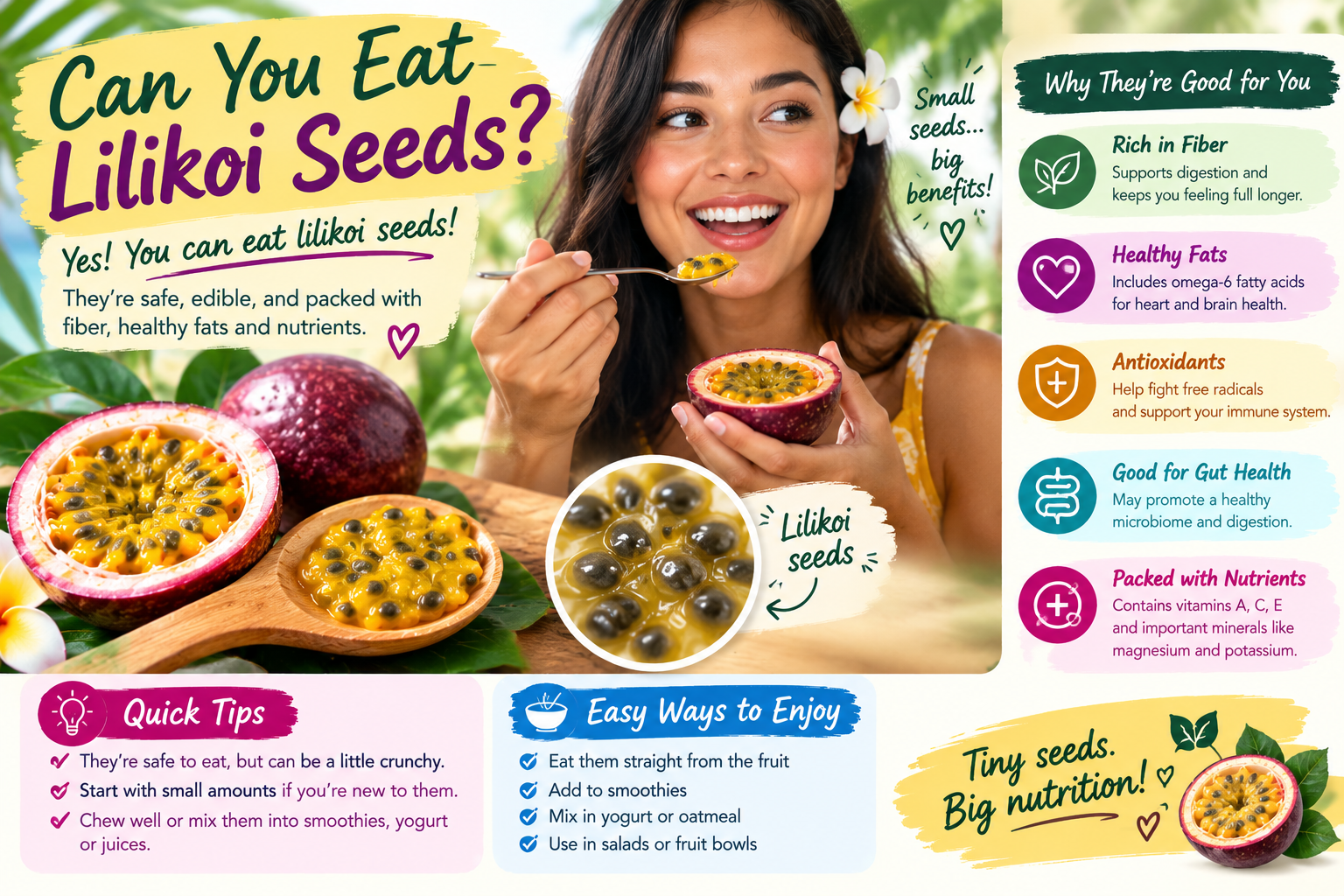
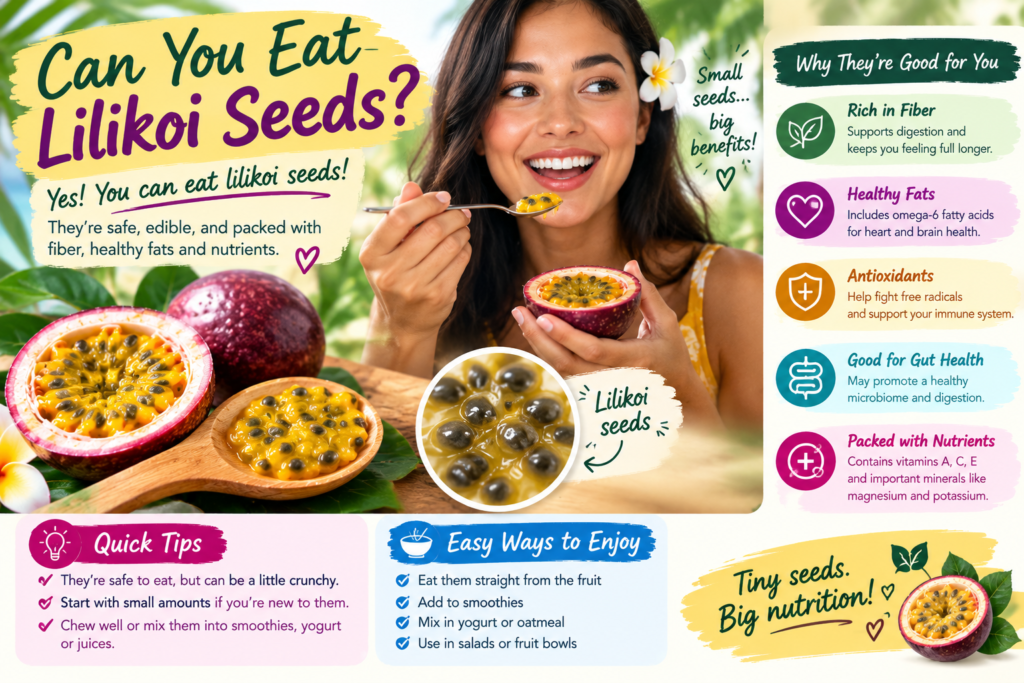
Yes, you can eat lilikoi seeds. They are 100% edible, completely safe, and packed with dietary fiber, antioxidants, and essential healthy fats. Eating the crunchy seeds alongside the tart yellow pulp gives you the full authentic Hawaiian passion fruit experience.
Most people staring at a freshly sliced passion fruit pause at the dark, crunchy centers. It’s a fair question. Generic food blogs often beat around the bush with long introductions before giving a straight answer. But understanding tropical ingredients shouldn’t require digging through endless filler.
Whether you’re sampling raw fruit in Hawaii or tasting legendary artisanal products from Colonel Lilikoi, knowing how to eat, prep, and enjoy these seeds makes all the difference.
What Is Lilikoi and How Do the Seeds Taste?
Lilikoi is the Hawaiian word for yellow passion fruit (Passiflora edulis var. flavicarpa). It is famous for its vibrant golden juice and intense aromatic tartness. Inside the thick outer rind sits a cavity filled with jelly-like arils surrounding small, hard black seeds.
The Flavor and Texture Profile
- The Pulp: Intensely tropical, sweet, and sharply acidic.
- The Seeds: Crunchy, slightly nutty, and mildly bitter if chewed on their own.
- The Combination: The snappy crunch of the seed balances the smooth, gelatinous texture of the tart fruit pulp.
Are Lilikoi Seeds Safe and Healthy?
Not only can you eat lilikoi seeds, but swallowing or chewing them adds significant nutritional value to your snack.
Key Health Benefits of Lilikoi Seeds
- Rich in Dietary Fiber: The fibrous seed coat promotes smooth digestion and helps maintain healthy gut motility.
- Packed with Polyphenols: Lilikoi seeds contain piceatannol, a powerful antioxidant that supports cardiovascular health and skin vitality.
- Contains Magnesium & Healthy Fats: The small kernels inside the seeds yield essential fatty acids and minerals that support overall wellness.
Pro Tip: If you have sensitive digestive issues or diverticulitis, swallow the seeds whole with the pulp rather than crushing large quantities, or strain them out using a fine mesh sieve.
Culinary Uses: How Brands and Chefs Use Lilikoi Seeds
In Hawaiian cuisine, lilikoi seeds are used both for texture and visual appeal.
Brands like Colonel Lilikoi have popularized Hawaiian passion fruit jams, lilikoi seedless butter, and tropical sauces worldwide. While seedless purées create smooth spreads, keeping the seeds intact provides a gourmet texture in desserts, salad dressings, and cocktails.
| Product Type | Seed Status | Best Used For |
| Fresh Lilikoi Pulp | Whole Seeds | Yogurt toppings, smoothies, ice cream |
| Lilikoi Butter (e.g., Colonel Lilikoi) | Seedless / Strained | Spreads, pastry fillings, toast |
| Tropical Coulis & Glazes | Partial Seeds | Cheesecake toppings, grilled chicken glazes |
| Lilikoi Jam & Jelly | Whole or Seedless | Charcuterie boards, marinades |
Recommended Lilikoi-Inspired Brand & Product Names
For entrepreneurs and creators building tropical food lines, beverage brands, or wellness products around passion fruit, choosing a memorable name is critical. Here is a curated list of brand names inspired by lilikoi, organized by brand vibe.
Modern & Minimalist
- Lili Co. | Sleek & Short | Premium Beverage Lines
- Kona & Lilikoi | Artisanal Hawaiian Vibe | Gourmet Jams & Spreads
- Pure Lilikoi | Clean & Direct | Cold-Pressed Juices
Catchy & Contemporary
- Crunchy Lilikoi | Playful & Textural | Snack Bars & Dried Fruits
- Gold Seed Co. | Luxe Tropical | Organic Wellness Supplements
- Island Pulp | Bold & Vibrant | Craft Cocktails & Mixers
Linguistic & Naming Psychology Breakdown
Names rooted in tropical botanicals like lilikoi carry built-in sensory triggers.
The word lilikoi uses soft, repeating liquid consonants (“L”) combined with open vowels. In phonetic symbolism, this creates a smooth, pleasant sensory experience in the consumer’s mind before they even taste the product. Combining it with authoritative modifiers—such as the heritage appeal in Colonel Lilikoi—creates an immediate perception of quality, craft, and regional authenticity.
Common Pitfalls When Using Tropical Names
When building a brand around passion fruit or lilikoi, avoid these common naming traps:
- Spelling Friction: Ensure your target audience can easily spell and pronounce native names without confusion.
- Over-localization: If you plan to scale nationally or globally, avoid names that limit your product line strictly to Hawaii unless island heritage is your core positioning.
- Trademark Bottlenecks: Always perform thorough trademark checks on botanical terms combined with common descriptors before finalizing packaging.
Strategic Validation Framework
Before launching a lilikoi-based brand or product, run your prospective name through these three filters:
- The Audio Test: Say the name out loud in a noisy environment. Is it clear on the first try?
- The Visual Domain Test: Does the name look clean as a single-word URL slug and social handle?
- The Sensory Match: Does the phonetic structure match the actual flavor profile (bold, tart, refreshing) of your product?
Frequently Asked Questions
Can you eat lilikoi seeds raw?
Yes. You can eat raw lilikoi seeds straight out of the fruit along with the surrounding yellow pulp.
Do lilikoi seeds taste bitter?
The seeds themselves have a neutral to slightly bitter, nutty taste. However, when eaten together with the sweet-tart pulp, the bitterness is completely masked.
How does Colonel Lilikoi prepare passion fruit products?
Colonel Lilikoi specializes in authentic Hawaiian passion fruit products, famously straining seeds to craft smooth lilikoi purées, passion fruit butters, and dessert toppings.
Can you chew lilikoi seeds or should you swallow them whole?
You can do both. Chewing the seeds releases extra antioxidants and fiber, while swallowing them whole provides a smooth texture experience without changing the flavor.
The 1-Rule Golden Takeaway
Don’t overthink the seeds: eat them raw for a satisfying crunch, strain them when you want a velvety purée, and always prioritize natural flavor when enjoying tropical fruit.
