
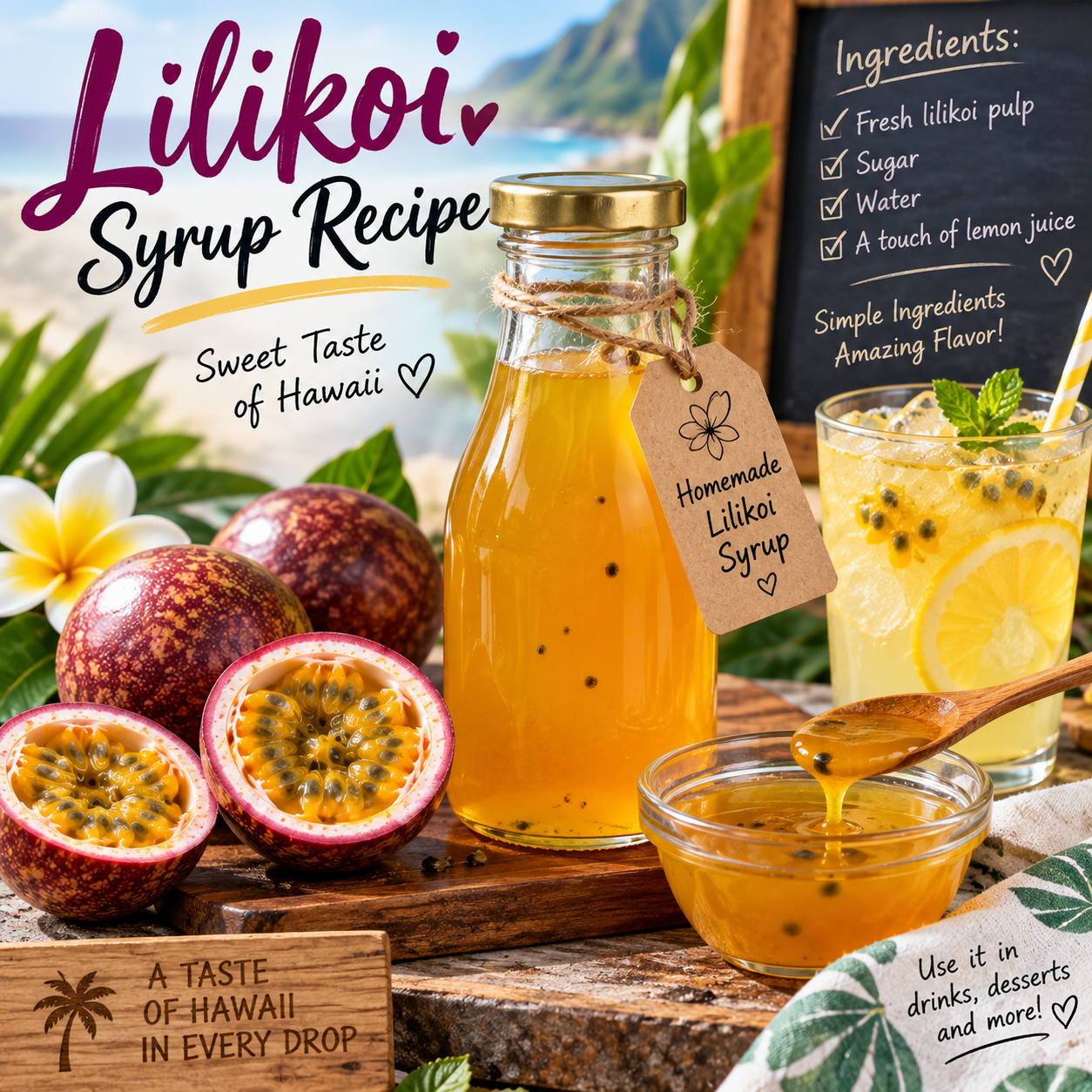
An authentic lilikoi syrup recipe transforms fresh yellow passion fruit juice and sugar into a vibrant, high-acid syrup with a 1:1 ratio. This golden elixir delivers an intense tropical aroma and tart-sweet balance, making it the benchmark flavor profile for artisanal beverage brands, culinary concepts, and tropical brand identities.
Most generic recipe and brand naming lists fail because they focus on surface-level aesthetic terms without understanding the underlying sensory and linguistic identity. When building a brand around a concept like lilikoi—the Hawaiian word for passion fruit—you need to align the sensory profile of your product with a precise phonetic and emotional identity.
The Master Lilikoi Syrup Recipe (3 Ingredients)
Creating a professional-grade syrup requires maintaining the bright, volatile aromatics of fresh fruit without scorching natural sugars.
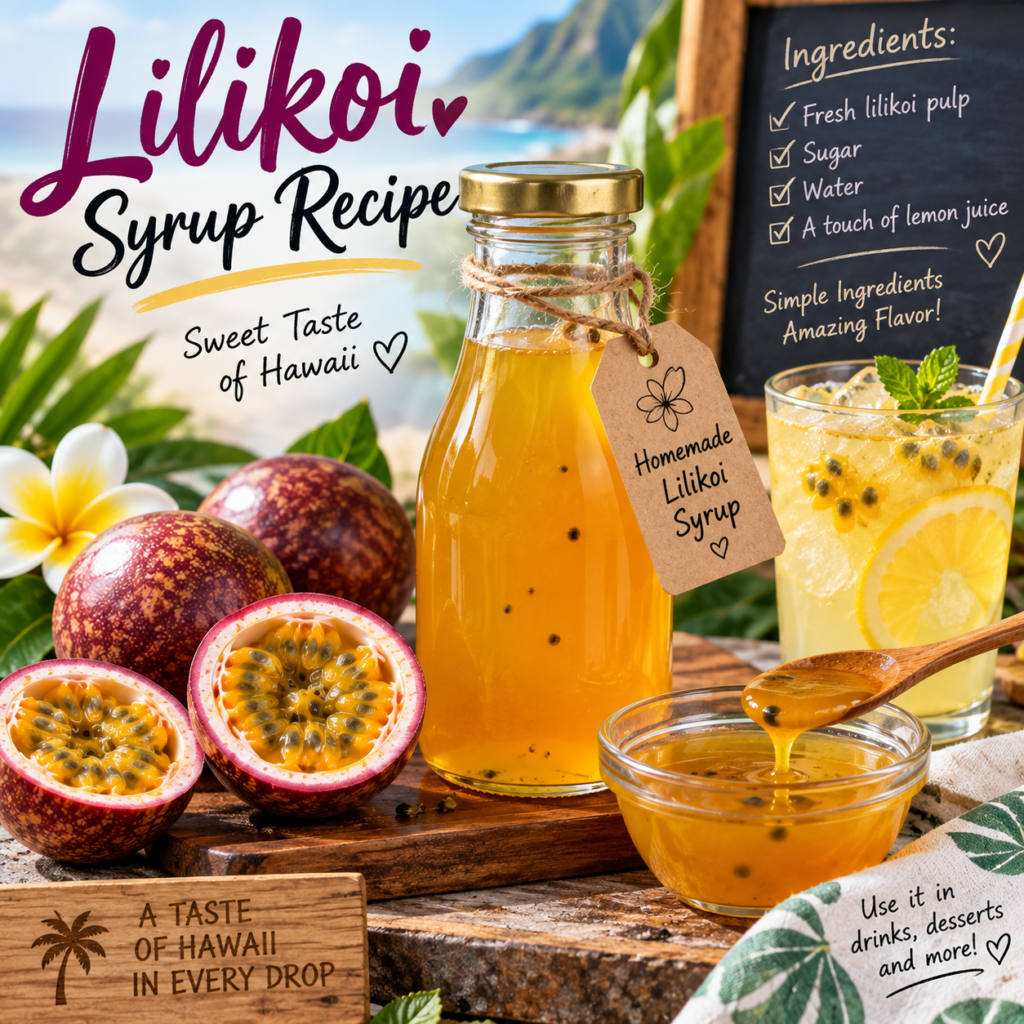
- 1 cup Fresh Lilikoi Juice (strained, seeds removed)
- 1 cup Granulated White Sugar (or raw cane sugar for deeper caramel notes)
- 1 tsp Fresh Lemon Juice (optional, acts as a natural stabilizer and brightener)
Step-by-Step Culinary Preparation
- Extract the Juice: Cut fresh lilikoi fruit in half. Scoop the pulp and seeds into a blender. Pulse on low speed for 3 to 5 seconds just to loosen the jelly from the seeds without crushing them.
- Strain the Liquid: Pour the mixture through a fine-mesh sieve into a bowl, pressing gently with a spatula to extract pure juice.
- Simmer and Dissolve: Combine the juice and sugar in a small saucepan over medium-low heat. Stir continuously until the sugar completely dissolves (approximately 3 to 5 minutes). Do not let it boil rapidly, as high heat dulls the fresh tropical top notes.
- Cool and Store: Remove from heat, let cool to room temperature, and pour into a sanitized glass bottle. Store in the refrigerator for up to one month.
Categorized Brand & Idea Name Concepts
If you are leveraging the tropical, high-end allure of this ingredient for a brand, product line, or signature offering, these curated names capture the essence of the fruit across distinct positioning angles.
1. Modern & Premium Concepts
- Lilikoi & Co. | Sleek, elevated heritage vibe | Best for luxury beverages, boutique hotels, skincare
- Gold Coast Lilikoi | Sun-drenched, aspirational, coastal | Best for lifestyle apparel, RTD cocktails
- Nectar & Nalu | Tropical flow, premium artisanal craft | Best for specialty syrup brands, juice bars
2. Aesthetic & Minimalist Concepts
- LILIKOI | Pure, uncluttered, iconic mononym | Best for high-end cosmetics, perfume, flagship spirits
- Moku Yellow | Island-inspired, color-driven minimalism | Best for design studios, swimwear, beverage packaging
- Sunsip | Bright, joyful, effortless simplicity | Best for natural sodas, functional wellness elixirs
3. Professional & Functional Concepts
- Lilikoi Labs | Scientific, formulation-focused, precise | Best for beverage formulation firms, food-tech
- Pacific Nectar Botanicals | Authoritative, natural, trade-oriented | Best for wholesale ingredients, craft extract suppliers
- Isle Yield | Agricultural precision, pure source | Best for farm-to-table supply chains, organic growers
Linguistic & Naming Psychology Breakdown
Here’s where most founders get it wrong: they choose names based purely on personal preference rather than phonetic mechanics.
The word lilikoi relies heavily on liquid consonants (L) and open vowels (I, O). In sound symbolism, soft consonants combined with front vowels evoke feelings of smoothness, liquid refreshness, and exotic luxury.
When consumers hear or read a lilikoi syrup recipe concept, the brain immediately triggers associations with brightness, high acidity, and premium island provenance. Using phonetic structures with repeating “L” sounds creates high recall memory loops (alliteration), making the brand name feel naturally melodic and effortless to pronounce.
Comparison & Meaning Matrix
| Brand Concept | Phonetic Trigger | Ideal Industry / Brand Fit | Target Audience Perception |
| Lilikoi Pure | Smooth liquids, open vowels | Organic syrups, wellness beverages | Clean, unadulterated, health-conscious |
| Tart & Tropics | Sharp plosives (T sound) | Craft sodas, cocktail mixers | Bold, energetic, flavor-forward |
| Sol Lilikoi | Short, punchy monetary rhythm | Sun care, RTD beach drinks | Youthful, summer-centric, vibrant |
| Hawaiian Nectar Co. | Formal heritage structure | Specialty food exports, gifting | Authentic, traditional, premium quality |
Common Pitfalls When Selecting Names
Let’s break it down simply. Avoid these strategic traps when choosing a brand name or product moniker centered around tropical ingredients:
- Pronunciation Friction: If your target demographic struggles to pronounce the name on the first try, you lose word-of-mouth momentum. Ensure phonetic clarity across markets.
- Trademark Bottlenecks: Generic terms like “Passion Fruit Syrup” cannot be trademarked effectively. Pairing a descriptive term with a distinctive brand mark (e.g., Aura Lilikoi) secures intellectual property protection.
- Scaling Limitations: Naming your company “Honolulu Lilikoi Syrups” locks you into a single product category and geographic region. Leave room for product line expansions like sauces, seltzers, or merchandise.
- Visual Packaging Clutter: Complex, long names clutter small label spaces on 750ml bottles or 12oz cans. Choose names that fit cleanly into minimalist typographic layouts.
Strategic Selection Framework
No jargon, just facts. Follow this four-step validation framework before committing to your brand name:
- Phonetic Stress Test: Say the name out loud five times in a sentence (e.g., “Have you tried…”). It should flow without verbal stumbles.
- Visual Hierarchy Check: Mock up the name on a bottle label template. Does the wordmark hold visual weight from three feet away?
- SEO & GEO Searchability: Search the exact term on Google and AI platforms. Ensure you aren’t competing directly with established global trademarks or dominant Wikipedia entities.
- Domain & Handle Availability: Verify that clean social handles and
.comdomain variations are obtainable without exorbitant aftermarket costs.
Frequently Asked Questions
What is the difference between lilikoi and passion fruit?
Lilikoi is the Hawaiian name specifically for the yellow passion fruit (Passiflora edulis f. flavicarpa). While purple passion fruit is smaller and sweeter, yellow lilikoi is larger, more tart, and significantly more aromatic, making it superior for syrup recipes and flavor extracts.
How long does homemade lilikoi syrup stay fresh?
When stored in an airtight, sterile glass container in the refrigerator, homemade syrup lasts up to 3 to 4 weeks. Adding a teaspoon of fresh lemon juice or a pinch of citric acid acts as a natural preservative to extend shelf life.
Can I use frozen pulp for a lilikoi syrup recipe?
Yes, thawed frozen lilikoi pulp works exceptionally well for syrup production. Ensure the pulp is 100% pure fruit without added sugars or water to maintain the correct acid-to-sugar ratio during cooking.
The 1-Rule Golden Takeaway
The best brands don’t just describe a product—they capture an undeniable visual and sensory feeling in a single, unforgettable word.
Suggested Next Steps for Your Project
- Trademark & Domain Check: Would you like to check domain availability strategies or trademark positioning for any specific name on the list?
- Packaging & Brand Copy: Do you need custom product description copy or label messaging tailored to a target demographic for this recipe idea?
