

To eat lilikoi (Hawaiian passion fruit), slice the fruit in half horizontally with a serrated knife to catch the juice, then scoop out the aromatic, seed-filled pulp with a spoon. You can eat the tart, gelatinous pulp and crunchy black seeds raw, or press the mixture through a fine-mesh sieve to extract pure lilikoi juice for beverages and desserts.
Most people encounter lilikoi on a trip to Hawaii or at a local specialty market and freeze up. Is the skin edible? Do you chew the seeds? Does a wrinkled shell mean it is rotten or ripe?
When building a food brand or launching a product line inspired by island flavors, understanding the raw product experience is step one. This guide cuts through the confusion to show you exactly how to eat lilikoi, select the best fruit, and use its bold taste profile effectively.
How to Eat Lilikoi Raw in 3 Simple Steps
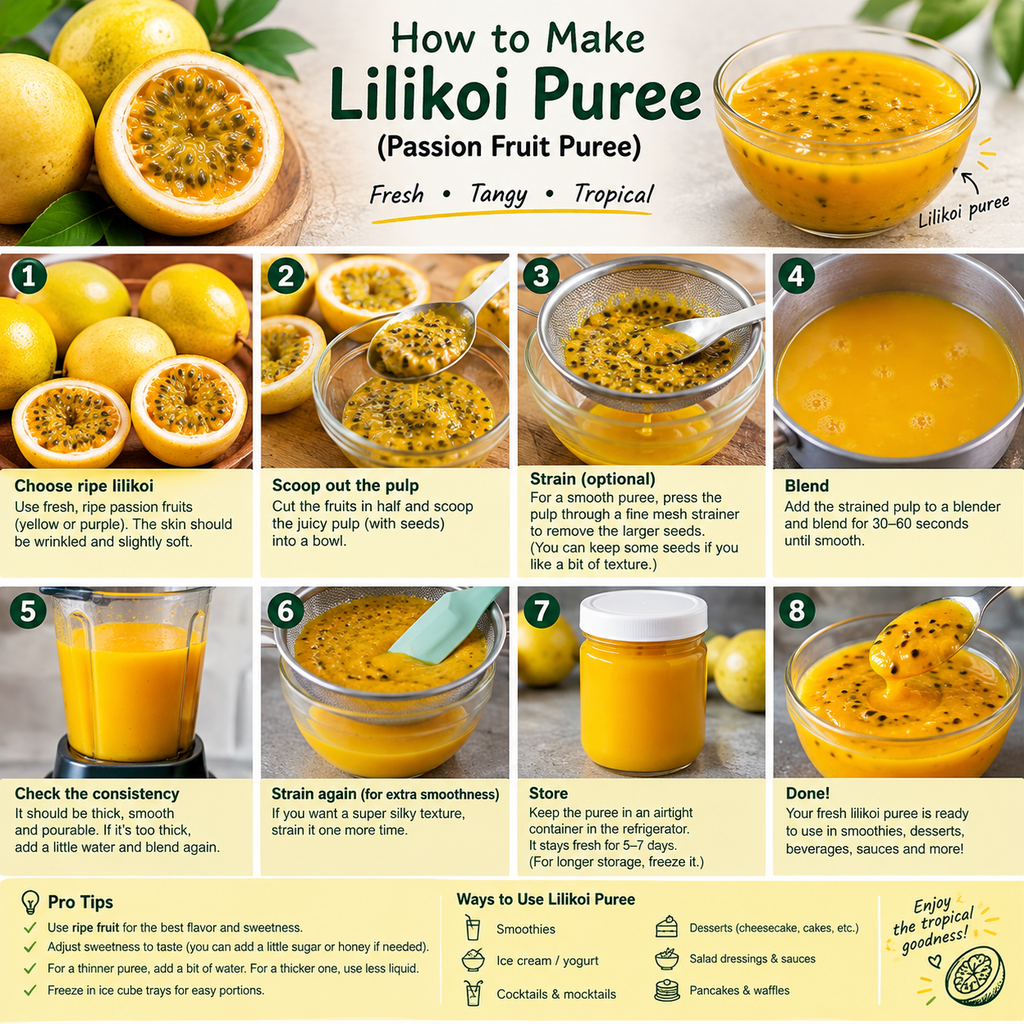
Eating fresh lilikoi requires no complex prep work, but a few quick techniques ensure you do not lose any precious juice.
- Slice Horizontally: Place the fruit on a stable cutting board. Use a serrated utility knife to cut through the tough outer rind. Slicing it horizontally keeps the juice pooled inside the lower half rather than spilling across your board.
- Scoop the Pulp: Use a metal spoon to scrape out the orange, gelatinous arils and dark seeds inside. Make sure to scrape close to the white inner rind (the pith) to get every drop, but do not eat the rind itself, as it is bitter and tough.
- Eat Seeds and All: Pop the scooped pulp directly into your mouth. The black seeds are completely edible and add a delightful crunch that balances the sharp, tropical acidity of the fruit.
How to Tell When Lilikoi Is Ripe
Here’s where most first-timers get it wrong: they throw away the best fruit because it looks bruised or aged.
- The Wrinkle Test: Smooth skin means the lilikoi is still tart and maturing. Heavily wrinkled, slightly dimpled skin indicates peak ripeness, high sugar content, and maximum aroma.
- The Weight Test: Pick up two fruits of equal size. The heavier one contains significantly more juice and pulp. Light fruits are often hollow or dried out inside.
- The Smell Test: Ripe lilikoi emits a powerful, sweet, and floral scent right through its shell. If it smells neutral, let it sit on your counter for a few days.
Lilikoi Flavor Profiles & Brand Pairing Matrix
Lilikoi offers one of the most intense flavor-to-volume ratios in the culinary world. Its high acidity and vibrant aromatics make it a versatile hero ingredient across food, beverage, and lifestyle categories.
| Lilikoi Variety | Flavor & Sensory Profile | Best Brand & Culinary Fit |
| Yellow Lilikoi (Yellow Passion Fruit) | Sharp, high acidity, deeply aromatic, intensely tropical punch | Artisan craft sodas, cocktail mixers, hot sauces, tangy marinades |
| Purple Lilikoi (Purple Passion Fruit) | Sweeter profile, milder acid, rich floral notes, darker juice | Premium ice creams, yogurts, luxury skincare, high-end preserves |
| Sweet Granadilla (Orange Lilikoi) | Low acid, very sweet, translucent white pulp, delicate flavor | Raw snacking, fruit bowls, wellness elixirs, kid-friendly treats |
3 Common Mistakes When Eating or Preparing Lilikoi
- Chewing the Seeds Too Hard: While the seeds are edible, biting down forcefully on every single seed creates an overly bitter, crunchy experience. Most locals swallow the pulp whole or lightly crush it with their tongue.
- Discarding the Seeds Entirely: Straining out every seed removes the distinct visual marker of authentic tropical passion fruit. Keep some seeds intact for visual contrast in jams, syrups, and craft beverages.
- Eating the White Pith: The soft white lining inside the hard shell holds zero sweetness and introduces a chalky, astringent flavor to your dish. Stick strictly to the golden pulp.
How to Extract and Use Pure Lilikoi Juice
If you prefer a smooth texture without seeds, turning fresh fruit into juice opens up endless culinary applications.
- Scoop: Transfer the pulp of 6–8 ripe fruits into a bowl.
- Pulse or Press: Transfer to a blender and pulse gently on low speed for 2–3 seconds to loosen the pulp from the seeds without pulverizing them. Alternatively, press the mixture through a fine-mesh sieve with a rubber spatula.
- Store: Pour the yield into a glass jar. Pure lilikoi juice keeps in the refrigerator for up to 7 days, or freezes flat in storage bags for up to 6 months.
Mix this extract into sparkling water, drizzle it over cheesecake, or blend it into a signature tropical glaze.
Frequently Asked Questions
Can you eat lilikoi skin?
No, the outer rind and white inner pith of the lilikoi are tough, bitter, and inedible. Only consume the jelly-like orange pulp and the black seeds contained inside the center cavity.
Is lilikoi the same thing as passion fruit?
Yes. “Lilikoi” is the Hawaiian word for passion fruit (Passiflora edulis). While yellow lilikoi is the most recognized variety across the Hawaiian Islands, purple and orange variations belong to the same botanical family.
Are lilikoi seeds good for you?
Lilikoi seeds are rich in dietary fiber, antioxidants, and essential polyphenols. They add a healthy, functional crunch when consumed raw alongside the sweet-tart pulp.
The 1-Rule Golden Takeaway
When in doubt, choose the ugliest fruit in the bowl—heavy, deeply wrinkled lilikoi always yields the sweetest, most aromatic reward.
What specific lilikoi recipe or brand application are you planning to develop next?
