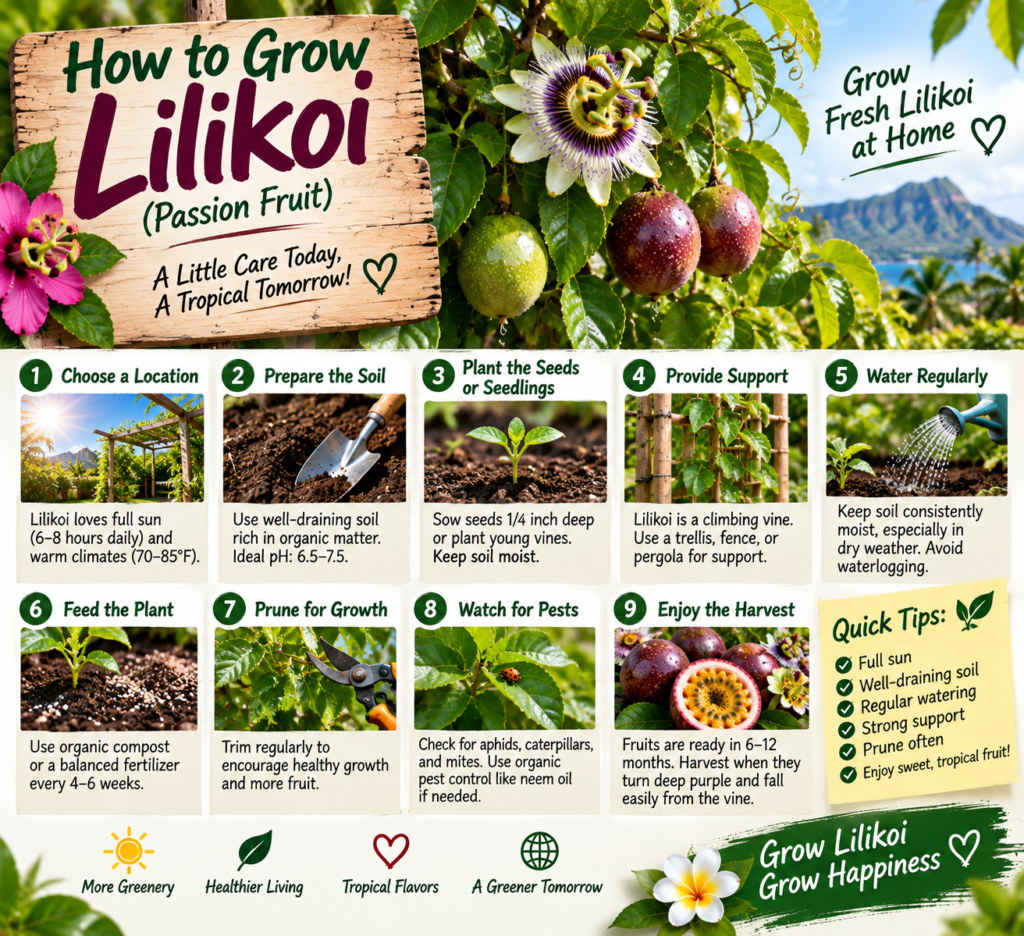

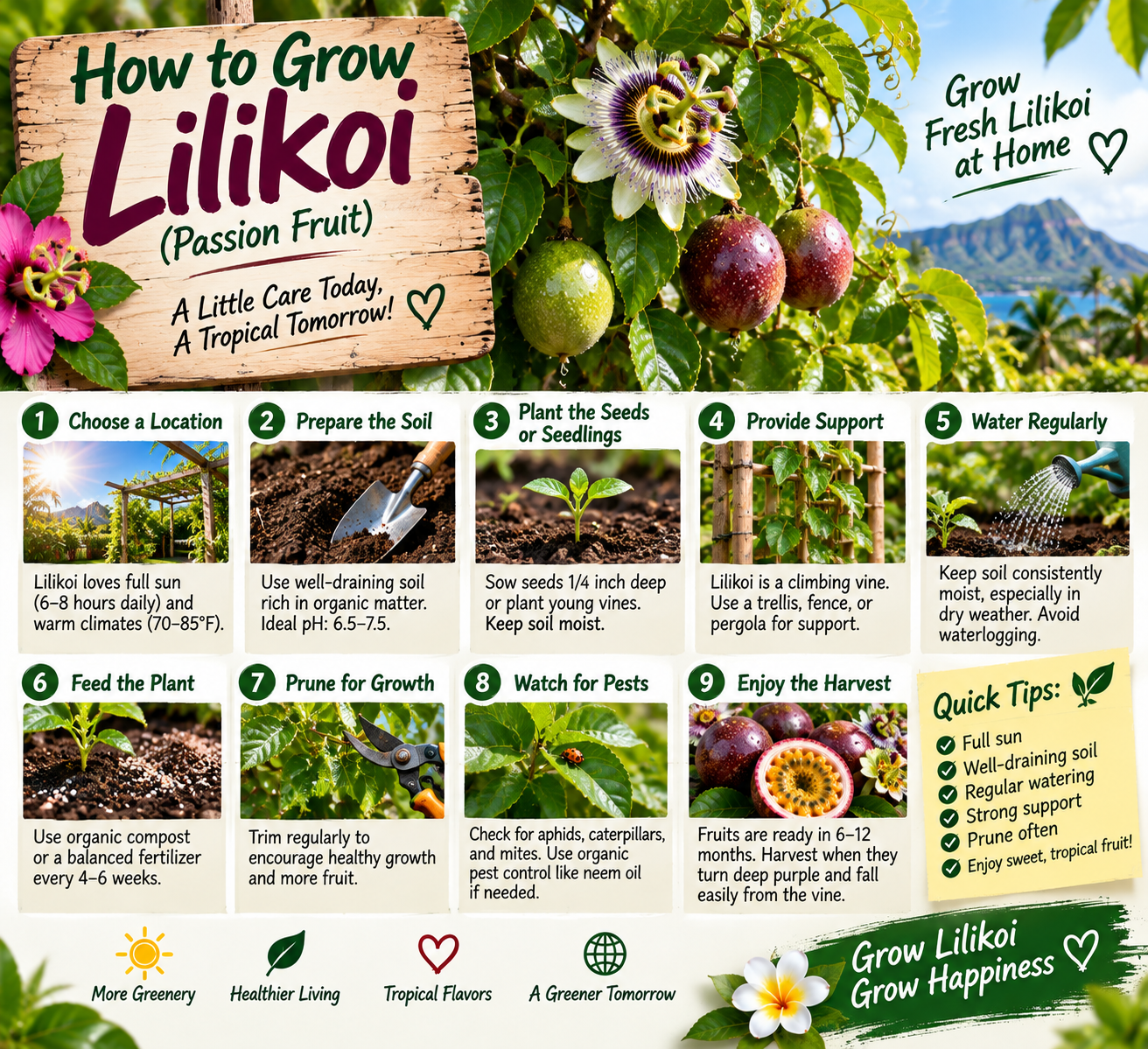
Growing lilikoi—the Hawaiian word for passion fruit (Passiflora edulis)—requires full sun, well-draining soil, rich organic matter, and a sturdy trellis to support its aggressive vine growth. With proper watering and frost protection, a single vine yields hundreds of fragrant fruits perfect for fresh eating or crafting homemade preserves.
Most gardening guides treat tropical vines as passive landscaping plants, omitting the critical balance between vine management and fruit yields. Whether you are planting a backyard trellis or learning how to make lilikoi syrup from your first harvest, success comes down to mastering soil moisture, pollination mechanics, and processing techniques.
Here is everything you need to know about growing, harvesting, and utilizing lilikoi effectively.
Varieties and Botanical Profiles
Understanding the distinct varieties of lilikoi ensures you select the right plant for your specific climate zone and flavor preferences.
- Yellow Lilikoi (Passiflora edulis f. flavicarpa) | Bold, Tart, High Acidity | Best for tropical climates, juice production, and culinary syrup bases.
- Purple Lilikoi (Passiflora edulis f. edulis) | Sweet, Aromatic, Cold-Tolerant | Ideal for subtropical areas, small gardens, and direct fresh consumption.
- Panama Red Lilikoi | Balanced Sweet-Tart, Large Yields | Excellent for medium-space trellises and high-yield home gardens.
- Sweet Granadilla (Passiflora ligularis) | Mild, Sweet, Floral | Best for frost-free microclimates where low-acidity fruit is preferred.
How to Grow Lilikoi: Step-by-Step Planting and Care
Lilikoi vines are vigorous growers that require intent, strong infrastructure, and targeted nutrient management from day one.
1. Soil Preparation and Sun Exposure
Lilikoi demands at least 6 to 8 hours of direct sunlight daily. Plant in rich, well-draining soil with a pH between 5.5 and 6.5. Heavy clay soils cause root rot; amend dense dirt with compost, coarse sand, and organic matter before planting.
2. Trellising and Structural Support
A mature vine can weigh over 50 pounds when laden with fruit. Install a heavy-duty wooden arbor, chain-link fence, or post-and-wire trellis at least 6 feet high before putting your plant in the ground.
3. Watering and Nutrient Requirements
Keep the root zone consistently moist but never waterlogged. Apply a balanced 10-10-10 fertilizer rich in potassium and nitrogen every six weeks during the active growing season to encourage flower production and fruit set.
4. Pollination Dynamics
Yellow varieties are self-sterile and require hand-pollination or active Carpenter bee populations to set fruit. Purple varieties are generally self-fertile but benefit from gentle manual agitation with a soft brush during midday blooms.
Fruit Characteristics and Ideal Use Matrix
| Variety Type | Flavor Profile | Fruit Size | Ideal Application | Growth Habit |
| Yellow Lilikoi | High-acid, intense tropical aroma | Large (3–4 inches) | Syrups, jams, cocktail mixers | Extremely vigorous; requires heavy pruning |
| Purple Lilikoi | Mildly acidic, rich sweetness | Medium (2–2.5 inches) | Fresh eating, desserts, garnishes | Moderately vigorous; handles light frost |
| Red Hybrid | Balanced sugar-to-acid ratio | Large (3 inches) | Juices, table fruit, baking | Compact vine; great for home fences |
How to Make Lilikoi Syrup from Your Harvest
Transforming fresh fruit into a shelf-stable, concentrated syrup preserves its tropical flavor for year-round use in beverages, desserts, and marinades.
Ingredients and Equipment
- 1 cup fresh lilikoi pulp (seeds included)
- 1 cup granulated sugar
- 1/2 cup water
- Fine mesh strainer or cheesecloth
- Medium saucepan
- Sterilized glass bottle
Step-by-Step Process
- Extract the Juice: Place the lilikoi pulp into a blender. Pulse on low for 2 to 3 seconds to separate the juice from the seeds without pulverizing the black seed coats.
- Strain the Mixture: Pour the pulsed pulp through a fine mesh strainer set over a bowl. Press gently with a spatula to yield pure, seedless lilikoi juice.
- Simmer the Base: Combine the fresh juice, sugar, and water in a saucepan over medium heat. Stir continuously until the sugar completely dissolves.
- Reduce and Cool: Bring the mixture to a gentle simmer for 5 minutes until it slightly thickens. Remove from heat and allow it to cool completely at room temperature.
- Bottle and Chill: Pour the finished syrup into a sterilized glass bottle. Store in the refrigerator for up to 3 weeks or freeze in portioned containers for up to 6 months.
Common Pitfalls When Growing Lilikoi
- Overwatering and Poor Drainage: Wet feet cause fungal root rot (Fusarium), which causes mature vines to wilt and die rapidly.
- Excessive Nitrogen Fertilizer: High-nitrogen feeds spur lush leaf foliage at the expense of blossom and fruit development.
- Inadequate Structural Support: Flimsy trellises collapse under the sheer weight of a mature, fruit-laden vine during windstorms.
- Harvesting Prematurely: Picking fruit off the vine before it drops naturally results in sour, under-developed flavor profiles.
- Pruning at the Wrong Time: Pruning in late spring removes active flower buds; restrict heavy vine shaping to late winter dormancy.
Strategic Harvesting and Pruning Framework
- Monitor Fruit Drop: Lilikoi signals full maturity by dropping from the vine to the ground naturally. Gather fallen fruit daily to prevent pest damage.
- Assess Skin Wrinkling: For maximum sweetness, allow gathered fruit to sit at room temperature until the skin forms light wrinkles.
- Conduct Winter Sanitation: Clean up dead wood and cut back lateral branches by one-third during late winter to stimulate productive new growth for spring.
- Sterilize Tools: Disinfect pruning shears between cuts using isopropyl alcohol to prevent virus transmission across vines.
Frequently Asked Questions
How long does it take for a lilikoi vine to produce fruit?
Lilikoi vines grown from nursery starts typically bloom and yield fruit within 12 to 18 months. Plants raised from seeds may take up to 2 years to begin flowering.
Why are my lilikoi flowers falling off without setting fruit?
Flower drop usually stems from poor pollination, dry soil conditions during flowering, extreme heat, or a lack of compatible pollinator varieties nearby (especially for yellow lilikoi).
Can you grow lilikoi in cold climates or containers?
Yes. Purple lilikoi can be grown in large 15-to-20-gallon containers and overwintered indoors near a bright window in USDA zones below 9.
How do you know when lilikoi pulp is ready for making syrup?
The pulp is ideal for syrup when the fruit skin is deeply colored, slightly wrinkled, and heavy with liquid juice, indicating peak sugar content.
The Golden Rule of Lilikoi Cultivation
Let the vine drop the fruit itself—patience on the vine delivers unmatched tropical flavor in your kitchen.
When you master the balance of strong structural support, well-drained soil, and patient harvesting, growing lilikoi yields an abundance of fresh fruit that elevates everything from morning beverages to artisanal syrups.