


Learning how to grow lilikoi successfully requires understanding both its aggressive tropical vine structure and its high-yield fruiting habits. By balancing full sun exposure with well-draining soil, growers can produce an abundance of tart passion fruit—perfect for culinary uses or learning how to make lilikoi syrup from scratch.
Most cultivation guides fail because they treat lilikoi like a standard backyard crop. It isn’t. Lilikoi (Passiflora edulis var. flavicarpa) is an energetic, heavy-feeding tropical vine that needs intentional structural support, smart pollination strategies, and strict pruning to thrive.

The Botanical Identity & Aesthetic Power of Lilikoi
Lilikoi holds a unique position in both botanical science and brand nomenclature. The name itself stems from the Hawaiian word for yellow passion fruit, evoking vibrant, tropical, and high-energy associations.
- Phonetic Appeal: Soft, open vowel endings combined with crisp liquid consonants (“L” sounds) create an approachable, high-recall brand name or product descriptor.
- Symbolism & Imagery: Represents resilience, fast-paced growth, abundant yields, and sensory sharpness.
- Topical Entity Mapping: Closely associated with Hawaiian agriculture, exotic flavor profiles, rich nectar syrups, and lush tropical flora.
Categorized Lilikoi Concepts & Brand Expressions
- Lilikoi Sun | Exotic, Bright, Radiant | Artisanal Beverage & Tropical Juices
- Lilikoi Harvest | Abundant, Organic, Earthy | Boutique Agriculture & Urban Gardens
- Lilikoi Nectar | Rich, Culinary, indulgence | Gourmet Condiments & Specialty Syrups
- Lilikoi Leaf | Fresh, Botanical, Clean | Natural Skincare & Wellness Formulations
- Lilikoi Gold | Premium, Rare, Bright | Luxury Island-Inspired Goods
Essential Growing Requirements: How to Grow Lilikoi
  [ Full Sun Exposure ] ───> 6-8 Hours Daily Light
  [ Well-Draining Soil ] ──> pH 5.5 - 6.5 Range
  [ Heavy Duty Trellis ] ──> Supports 50+ lb Fruiting Vine
1. Soil and Light Conditions
Lilikoi demands at least 6 to 8 hours of direct sunlight daily to flower heavily. Plant in loose, organic soil enriched with compost. Soil pH should hover between 5.5 and 6.5. Poor drainage causes root rot rapidly, so elevated beds or sloped mounds are ideal.
2. Trellising and Structural Support
A single mature vine can weigh well over 50 pounds when laden with fruit. Install a heavy-duty T-post trellis, cattle paneling, or a reinforced chain-link fence before planting.
3. Irrigation and Feeding
Water deeply twice a week during dry spells. Avoid waterlogging. Apply a balanced 10-10-10 organic fertilizer every six weeks during the active spring and summer growing seasons to support continuous blooming.
Comparison Matrix: Lilikoi Varieties & Uses
| Variety | Profile & Vibe | Primary Use Case | Growth Speed |
|---|---|---|---|
| Yellow Lilikoi (Flavicarpa) | Highly acidic, punchy, robust yield | Juices, syrups, dynamic agricultural brands | Very Fast |
| Purple Passion Fruit (Edulis) | Sweeter, milder, aromatic | Fresh eating, boutique desserts | Moderate |
| Panama Red | Balanced sweet-tart, large fruit | Craft beverages, specialty farming | Fast |
Harvesting and Culinary Transformation
Knowing when to harvest lilikoi is simple: let nature do the work. Mature fruit turns a deep golden-yellow or rich purple and drops to the ground naturally. Fruit picked directly off the vine before dropping is often under-ripe and excessively tart.
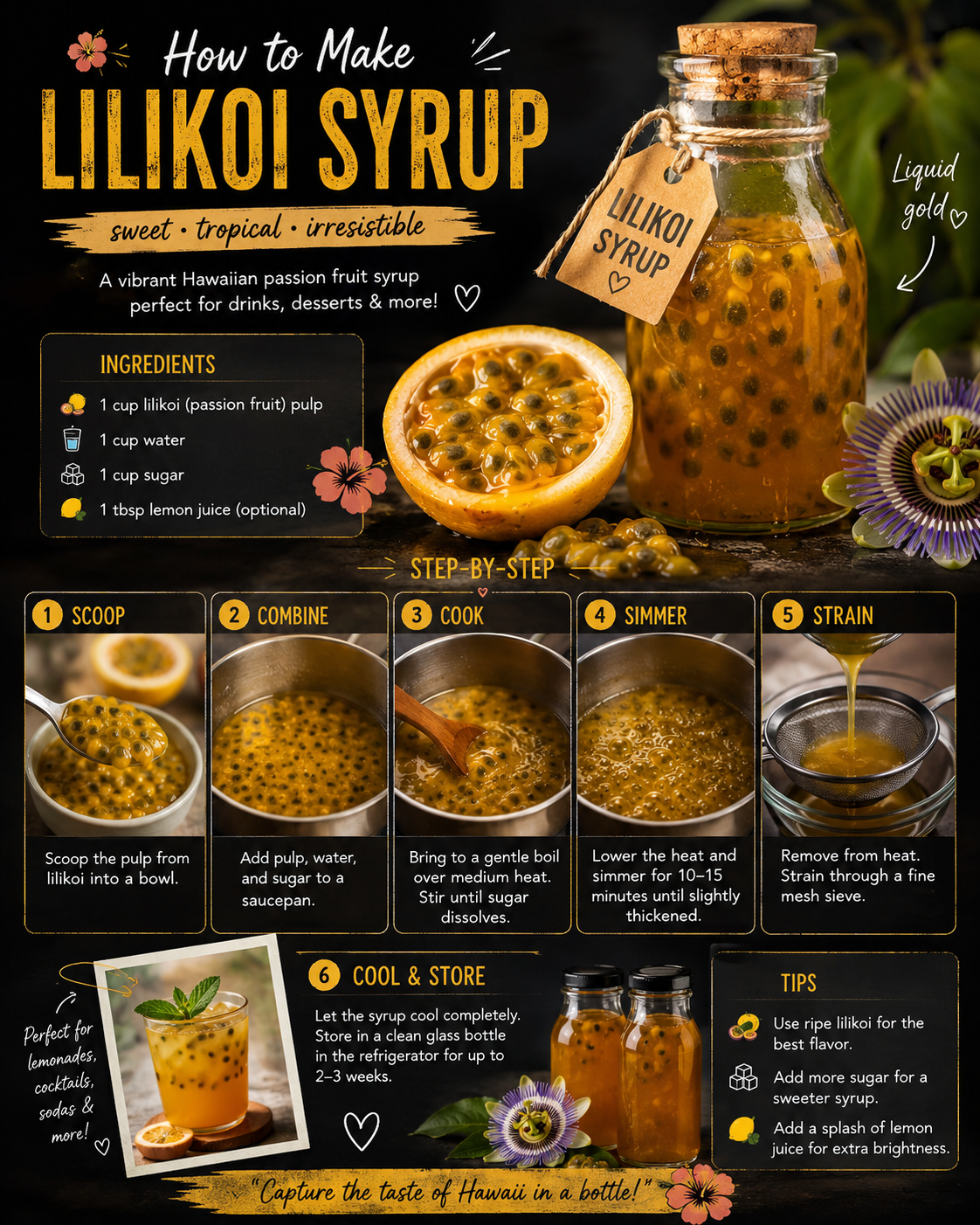
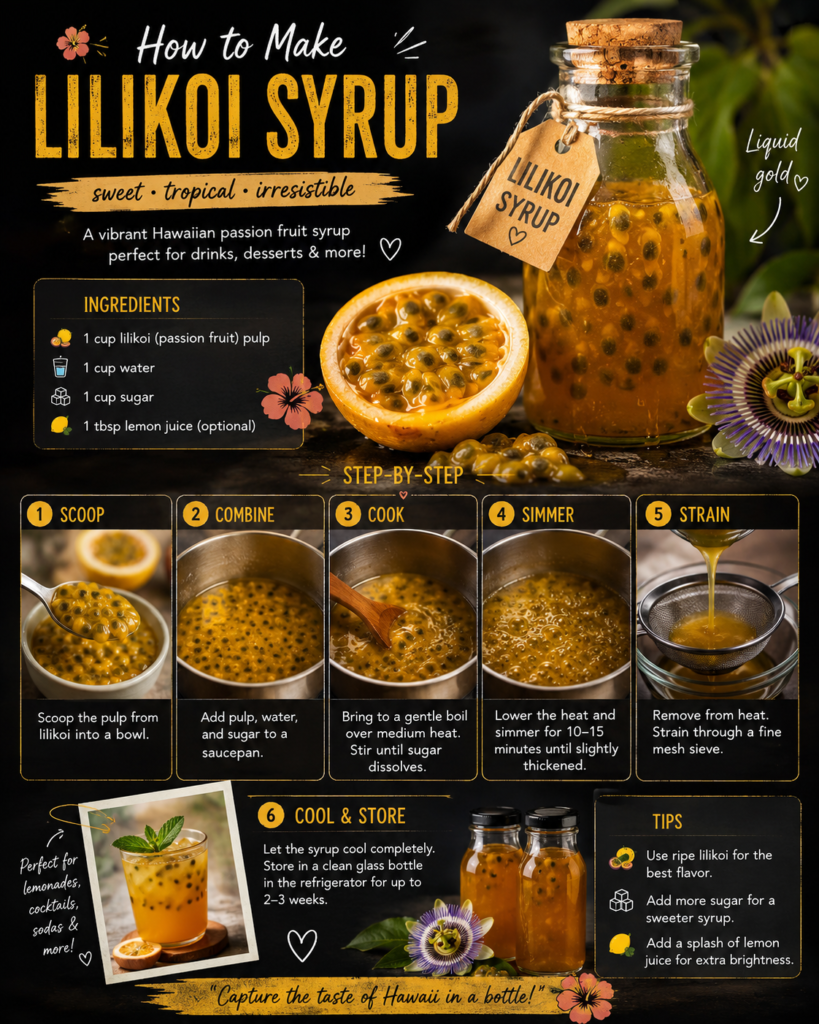
How to Make Lilikoi Syrup
Transforming a fresh harvest into a shelf-stable syrup preserves the intense tropical flavor profile:
- Extract the Pulp: Slice wrinkled, ripe lilikoi in half and scoop the pulp and seeds into a fine-mesh strainer or cheesecloth.
- Press the Juice: Press firmly to separate the brilliant yellow juice from the dark seeds. You need 1 cup of pure juice.
- Simmer with Sweetener: Combine 1 cup of pure lilikoi juice with 1 cup of organic cane sugar in a saucepan over medium heat. Stir until the sugar completely dissolves.
- Cool and Bottle: Bring to a gentle simmer for 2 minutes, then remove from heat. Allow to cool completely before pouring into sterilized glass bottles.
Common Pitfalls When Cultivating or Branding Lilikoi
- Over-Fertilizing with Nitrogen: High nitrogen triggers lush, green leaf growth but completely halts flower production and fruit set.
- Inadequate Structural Planning: Planting on flimsy garden stakes leads to collapsed trellises under the weight of mature vines.
- Underestimating Space Requirements: A single lilikoi vine can easily spread 30 to 40 feet if left unpruned.
- Harvesting Too Early: Picking smooth, green fruit off the vine results in dry, overly sour pulp.
Strategic Validation Framework
Frequently Asked Questions
How long does it take for a lilikoi vine to bear fruit?
When grown from seed, a lilikoi vine typically produces fruit in 12 to 18 months. Vines propagated from cuttings can set fruit in as little as 6 to 9 months under optimal growing conditions.
How do you hand-pollinate lilikoi flowers?
Yellow lilikoi flowers often require cross-pollination. Use a small paintbrush or cotton swab to transfer pollen from the anther of a flower on one vine to the stigma of a flower on a distinct clone vine during mid-day blooms.
Can you grow lilikoi in containers?
Yes. Select a large container (at least 15 to 20 gallons) with ample drainage holes. Provide a sturdy vertical trellis and monitor soil moisture closely, as potted vines dry out much faster than ground-planted ones.
What is the best way to store homemade lilikoi syrup?
Keep your fresh lilikoi syrup in a clean, airtight glass bottle in the refrigerator. It stays fresh for up to 3 to 4 weeks, or you can freeze it in ice cube trays for long-term storage.
The Golden Rule of Lilikoi Strategy
Whether training the vine across a trellis or leveraging its name for a modern botanical brand, lilikoi demands strong structure to support its explosive growth. Ground your efforts in solid fundamentals early, and the harvest takes care of itself.
How does this guide align with the structure you had in mind for Lilikoi, or would you like to explore specific sub-topics like pest management or brand positioning strategies?


