
Making lilikoi jelly requires extracting pure passion fruit juice, combining it with pectin and sugar in equal parts, and boiling the mixture until it reaches 220°F (104°C). This process captures the vibrant, tropical acidity of Hawaiian passion fruit in a perfectly set, crystal-clear preserve.
Generic recipes often fail because they miscalculate pectin ratios or scorch the delicate fruit flavor during extraction. Whether you are crafting artisanal preserves for a boutique food brand or perfecting your kitchen technique, understanding how to make lilikoi jelly starts with mastering the foundational liquid: learning how to make lilikoi juice properly.
Here is your definitive, step-by-step blueprint to extracting, setting, and bottling pure lilikoi perfection.
The Core Ingredients & Tools
Great preserves start with precise inputs. Avoid artificial additives—lilikoi possesses enough natural aroma and tartness to stand on its own.
- Fresh Lilikoi (Passion Fruit): 30 to 40 ripe fruits (wrinkled skins yield the sweetest juice).
- Granulated Sugar: 4 cups (balances the intense natural acidity).
- Powdered Fruit Pectin: 1 box (1.75 oz / 49g).
- Water: ½ cup (for juice extraction).
- Butter: ½ teaspoon (optional, prevents foaming).
- Equipment: Fine-mesh strainer, cheesecloth, large non-reactive pot, and sanitized Mason jars.
Phase 1: How to Make Lilikoi Juice (The Foundation)
You cannot make clean, amber-clear jelly without first extracting clear passion fruit juice. The seeds and pulp add bitter notes if boiled directly into the setting batch.
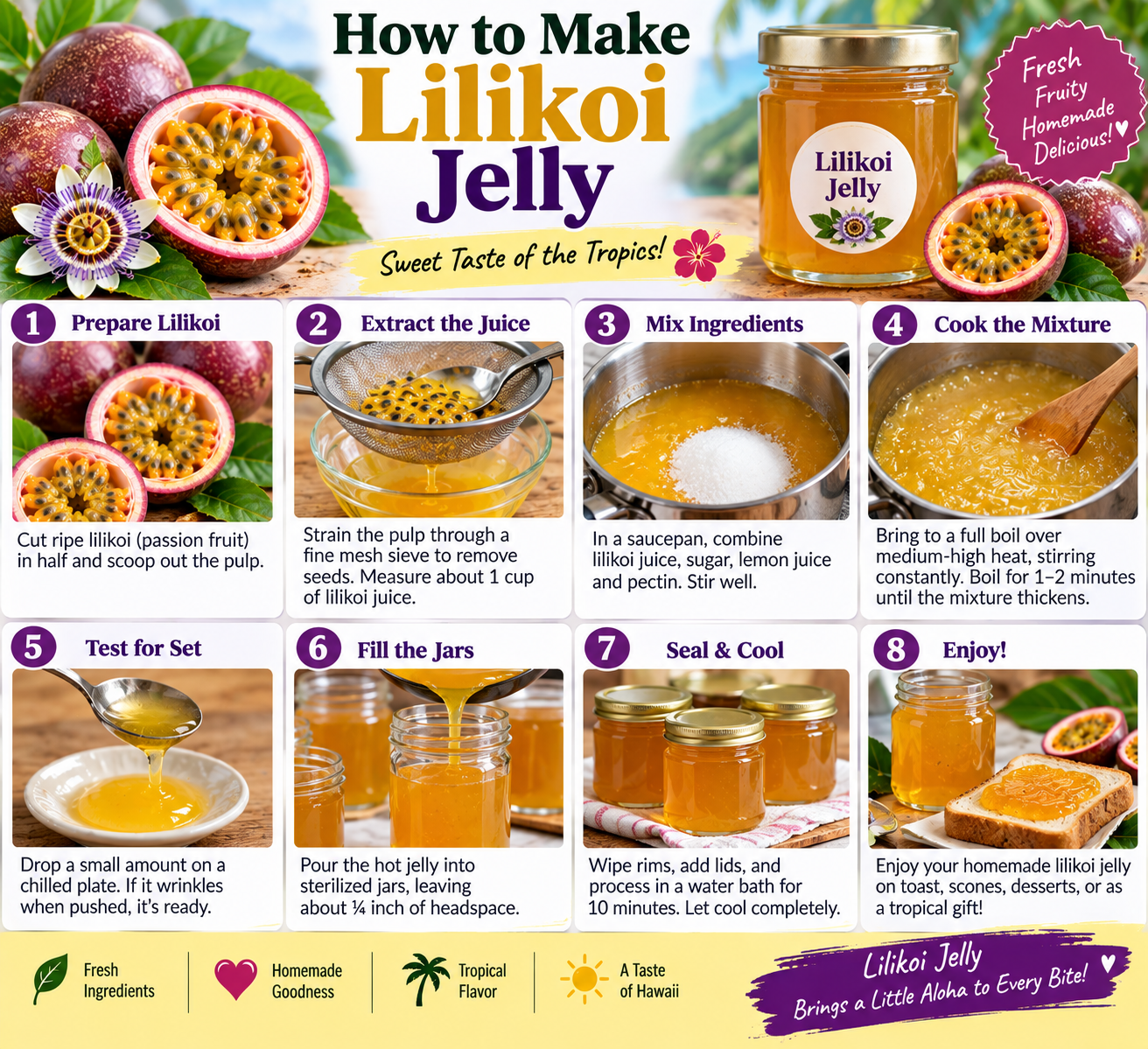
- Harvest and Slice: Wash your lilikoi thoroughly. Slice each fruit in half over a bowl to catch every drop of liquid.
- Scoop the Pulp: Use a spoon to scrape the yellow pulp and black seeds into your bowl.
- Separate the Liquid: Pour the pulp mixture into a blender. Pulse on low for 2 to 3 seconds—just enough to loosen the pulp from the seeds without pulverizing the black seed coats.
- Strain Completely: Pour the mixture through a fine-mesh strainer lined with double-layered cheesecloth into a clean measuring cup. Press gently with a spatula to yield 2 cups of pure juice.
Pro Tip: If you want a perfectly clear jelly, let the juice sit in the refrigerator overnight so sediment settles to the bottom before pouring off the clear top layer.
Phase 2: How to Make Lilikoi Jelly (Step-by-Step)
Now that your base liquid is ready, transform that tart Hawaiian juice into a firm, glistening spread.
- Combine Base Ingredients: In a large, heavy-bottomed stainless steel pot, mix 2 cups of pure lilikoi juice, ½ cup of water, and 1 box of powdered pectin. Add ½ teaspoon of butter to reduce foam.
- Bring to a Rolling Boil: Place the pot over high heat. Bring the mixture to a hard rolling boil (one that continues to bubble even when stirred), stirring constantly.
- Add Sugar Promptly: Dump in 4 cups of sugar all at once. Stir vigorously until fully dissolved.
- Boil to Set Point: Return the mixture to a hard rolling boil. Boil continuously for exactly 1 minute, stirring non-stop to prevent scorching.
- Test the Set: Remove from heat. Skim off any remaining surface foam with a metal spoon.
- Jar and Seal: Ladle the hot jelly into sanitized, warm Mason jars, leaving ¼ inch of headspace. Wipe the rims clean, place the lids, and process in a boiling water bath for 10 minutes.
Flavor Profile & Processing Variations
| Prep Style | Flavor Characteristics | Ideal Uses / Brand Positioning |
| Traditional Clear Jelly | Crisp, tart, bright tropical finish with absolute clarity | Premium artisan jars, gift baskets, breakfast spreads |
| Lilikoi Seed-In Jam | Crunchy texture, rustic appeal, higher visual contrast | Boutique bakery glazes, cheese board pairings |
| Pure Unsweetened Juice | Sharp acidity, intense aromatic top notes | Cocktail bases, marinades, tropical beverage lines |
Common Pitfalls When Making Lilikoi Jelly
Even experienced preservers run into issues with passion fruit due to its high natural acidity and delicate aromatic compounds.
- Overcooking the Juice: Boiling lilikoi juice during the extraction phase destroys volatile aromatic esters, leaving behind a dull, cooked taste instead of a fresh tropical burst.
- Failed Jelly Set: Passion fruit contains high acidity, which can sometimes interfere with standard pectin. Always ensure exact measurements of sugar and pectin; reducing sugar compromises the structural set.
- Pulverizing Seeds in the Blender: Running a blender on high speed breaks the seeds into small black flecks, adding astringency and ruining the visual elegance of your jelly.
- Using Unripe Fruit: Smooth, firm lilikoi look beautiful, but wrinkled, slightly ugly lilikoi contain significantly higher sugar content and richer flavor profiles.
Strategic Quality Selection Framework
When testing batches for consumer sales or personal storage, follow this 4-step validation process:
- Brix Level Check: Measure the sugar concentration using a refractometer. Aim for a final Brix reading of 65% for commercial stability.
- The Cold Spoon Test: Place a metal spoon in the freezer for 10 minutes. Dip it into the boiling pot; if the liquid sheets off the spoon instead of dripping, the jelly is ready.
- Clarity Audit: Hold a jar up to strong light. Premium lilikoi jelly should be translucent and glowing amber-gold, free from cloudiness or trapped air bubbles.
- Shelf-Life Inspection: Store processed jars in a cool, dark room for 24 hours. Check for proper vacuum seals before labeling or shipping.
Frequently Asked Questions
Why didn’t my lilikoi jelly set properly?
Lilikoi jelly usually fails to set due to incorrect sugar ratios, insufficient boiling time after adding pectin, or using juice that is overly diluted. Reboil the batch with a mixture of ¼ cup sugar, ½ cup water, and 1 tablespoon of fresh pectin per 4 cups of jelly base.
Can I learn how to make lilikoi juice without a blender?
Yes. Simply heat the fruit pulp in a saucepan over low heat for 3 to 5 minutes until warm, then press it through a fine-mesh strainer using the back of a ladle. Do not boil the pulp directly.
How long does homemade lilikoi jelly last?
Unopened, water-bath-canned jars last up to 12 months in a cool, dark place. Once opened, keep the jar refrigerated and consume within 1 month for optimal flavor.
The 1-Rule Golden Takeaway
Never compromise on heat management: gentle processing preserves the vibrant tropical soul of lilikoi, while excessive boiling turns a world-class preserve into flat, generic sugar syrup.
