
A classic homemade lilikoi butter recipe combines fresh passion fruit juice, rich egg yolks, sugar, and unsalted butter cooked gently until thick and velvet-smooth. This vivid Hawaiian passion fruit curd delivers an intense sweet-tart balance, while an accompanying honey lilikoi foam recipe provides a light, airy topping perfect for elevated desserts, drinks, and culinary branding.
While many recipe sites treat tropical curds as generic spreads, passion fruit requires precise heat control and acid balance. Lilikoi (passion fruit) brings a distinct aromatic profile that behaves differently from traditional lemons or limes. Pairing a rich butter curd with a velvet-light foam creates a sensory contrast that turns everyday baking into a memorable craft.
The Art of Lilikoi: Two Essential Formulations
Understanding how passion fruit juice interacts with fats and sweeteners allows you to create two distinct textures: a dense, rich spread and a delicate, whipped topping.
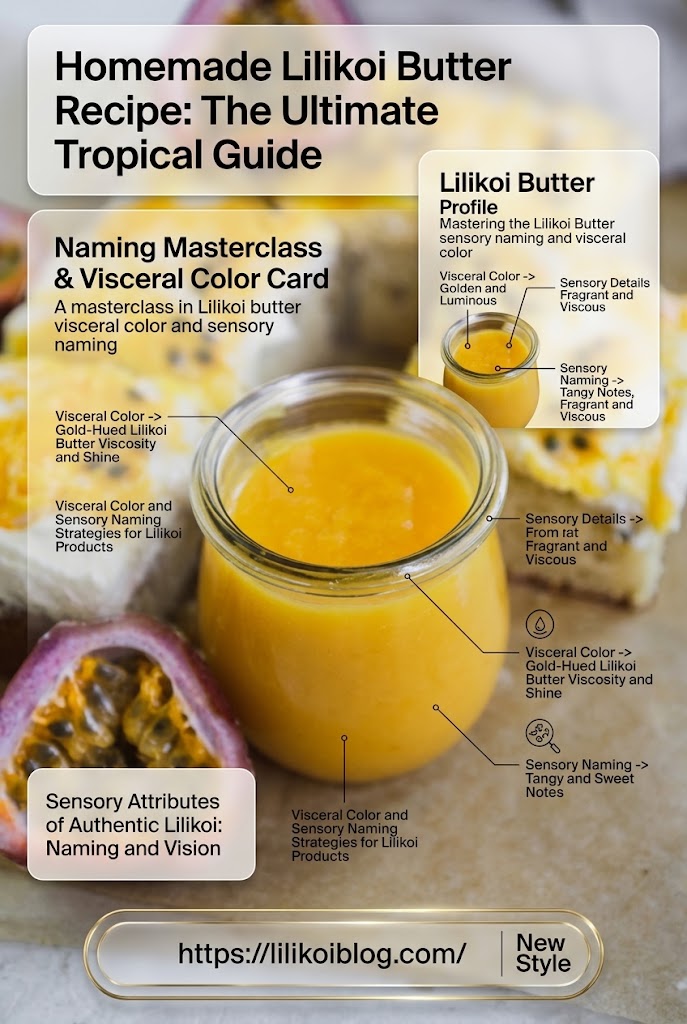
1. Classic Homemade Lilikoi Butter
This rich, spreadable curd brings a vibrant yellow color and bold, tropical tartness to toast, scones, or cake layers.
- Fresh Lilikoi Juice: 1 cup (strained, seeds removed)
- Egg Yolks: 6 large room-temperature yolks (for emulsification and body)
- Granulated Sugar: 3/4 cup
- Unsalted Butter: 1/2 cup (cubed and chilled)
- Pinch of Sea Salt: Balances the intense fruit acidity
Step-by-Step Preparation
- Whisk the Base: In a non-reactive saucepan (stainless steel or ceramic), whisk together fresh lilikoi juice, egg yolks, sugar, and sea salt until smooth.
- Apply Gentle Heat: Place the saucepan over low-medium heat. Cook continuously with a silicone spatula or whisk, ensuring the mixture does not scrape or stick to the bottom.
- Thicken the Curd: Continue stirring for 8–10 minutes until the mixture coats the back of a spoon (reaching approximately 170°F / 77°C). Do not let it boil, or the eggs will curdle.
- Mount with Butter: Remove the pan from the heat immediately. Stir in the chilled, cubed butter one piece at a time until fully incorporated and glossy.
- Strain and Chill: Pour the butter through a fine-mesh sieve into clean glass jars. Allow it to cool at room temperature before sealing and refrigerating.
2. Silky Honey Lilikoi Foam
This ultra-light topping elevates cold brew coffee, craft cocktails, tarts, and plated desserts with a delicate floral sweetness.
- Fresh Lilikoi Juice: 1/3 cup (strained)
- Raw Wildflower Honey: 3 tablespoons
- Heavy Whipping Cream or Egg White Base: 1/2 cup heavy cream (or 2 pasteurized egg whites for an artisanal cocktail foam)
- Cold Water: 2 tablespoons
Step-by-Step Preparation
- Dissolve the Honey: In a small glass bowl, whisk the honey into warm water until completely liquid.
- Combine Aromatics: Stir in the strained lilikoi juice until fully blended.
- Whip or Charge:
- Handheld Frother Method: Combine the honey-lilikoi liquid with heavy cream in a tall pitcher and froth for 30–45 seconds until soft, airy peaks form.
- Whipping Siphon Method: Pour the mixture into an $iSi$ cream whipper, charge with one $N_2O$ charger, shake vigorously, and dispense immediately
Flavor Profile & Culinary Application Matrix
| Formulation | Core Texture | Primary Flavor Notes | Ideal Culinary Uses |
| Lilikoi Butter | Rich, velvety, spreadable | Intense tart fruit, rich butter, subtle caramel sweetness | Toast, scones, cheesecake topping, macaron filling, tart bases |
| Honey Lilikoi Foam | Light, airy, micro-foamed | Floral honey, bright tropical acid, delicate cream | Cold brew coffee, craft cocktails, fresh fruit parfaits, shaved ice |
Linguistic & Sensory Appeal of Lilikoi
The word Lilikoi carries deep regional roots and sensory associations:
- Phonetic Fluidity: The soft liquid consonants ($L$ and $K$) create a melodic, premium feel that evokes tropical relaxation and artisan quality.
- Vivid Color Association: The natural bright yellow-orange hue delivers high visual impact on the plate and on social media feeds.
- Sensory Contrast: Combining a dense, tart homemade lilikoi butter recipe with a light, floral honey lilikoi foam recipe appeals to high-end culinary palates seeking multi-textured experiences.
Common Pitfalls When Making Lilikoi Curds & Foams
- Direct High Heat: Cooking egg yolks over direct high heat curdles the fats, leaving a metallic taste and grainy texture. Always use low heat or a double boiler.
- Using Reactive Cookware: Aluminum or unlined copper pans react with the high acidity of passion fruit, altering the vivid color and adding off-flavors. Use stainless steel, glass, or ceramic.
- Over-Sweetening: Adding excessive sugar masks the natural aromatic brightness of true Hawaiian lilikoi. Keep the sweet-to-sour ratio balanced.
- Skipping the Strainer: Leaving stray seeds or tiny egg strands intact ruins the silky texture of both the butter and the foam. Always pass final liquids through a fine-mesh sieve.
Strategic Storage & Culinary Yield Framework
- Temperature Control: Store lilikoi butter in airtight glass jars in the refrigerator for up to 3 weeks, or freeze for up to 6 months.
- Foam Freshness: Prepare honey lilikoi foam fresh or store in a whipping siphon under pressure for up to 48 hours for optimal volume.
- Batch Consistency: Always weigh ingredients in grams when scaling recipes up for artisanal production or catering.
Frequently Asked Questions
Can I use frozen or bottled passion fruit pulp for this recipe?
Yes. If using frozen unsweetened passion fruit puree, thaw completely before cooking. If using sweetened pulp, reduce the added sugar in the recipe by 25–30% to maintain proper acid balance.
Why did my lilikoi butter turn out runny?
Lilikoi butter thickens significantly as it cools in the refrigerator. If it remains liquid after chilling, it was likely removed from the heat before the egg yolks reached complete gelation (170°F / 77°C).
How do I stabilize the honey lilikoi foam for longer events?
For a longer-lasting foam, add 1/4 teaspoon of soy lecithin powder or xanthan gum to the liquid mixture before whipping or charging in a siphon.
The 1-Rule Golden Takeaway
Respect the natural acidity of the fruit—gentle heat preserves the bold, unmistakable essence of true Hawaiian lilikoi.
