
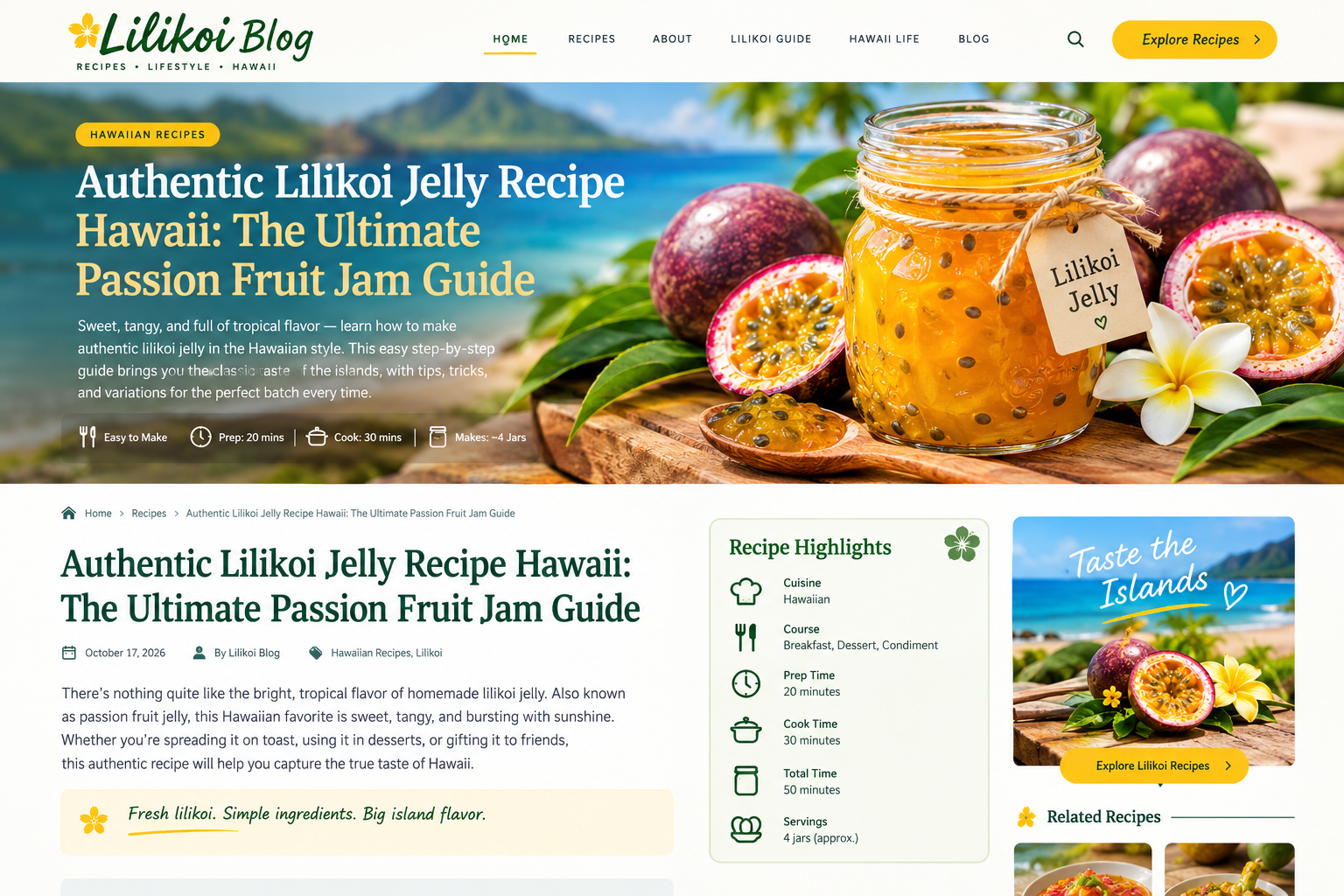
An authentic lilikoi jelly recipe hawaii style combines strained yellow passion fruit juice, sugar, and pectin to yield a crystal-clear, sweet-tart tropical spread. Capturing Hawaii’s signature flavor requires balancing natural fruit acidity with precise cooking temperatures for a perfect jell.
Most store-bought jams rely on artificial flavorings or high-fructose corn syrup that mask true tropical notes. When crafting native island spreads, understanding flavor balance and physical presentation—like making shining jars of passion fruit lilikoi jewels—defines the difference between a cloudy failure and a prize-winning batch.
The Island Flavor Profile: Why Hawaiian Lilikoi Stands Alone
Lilikoi (yellow passion fruit) is renowned for its intense aromatic punch and high natural acidity. Unlike purple passion fruit varieties, the Hawaiian yellow lilikoi (Passiflora edulis f. flavicarpa) packs a sharper tartness that pairs exceptionally well with pure cane sugar.
When boiled down into jelly, it creates an unmistakable amber translucency. Food artisans often call these glowing orange-gold jars passion fruit lilikoi jewels because of their sparkling appearance when held up to the light.
Categorized Recipe Variations & Ingredient Ratios
Different culinary uses call for distinct jelly consistencies and flavor highlights. Here is how to structure your batch based on your intended application.
1. Traditional Island Style (Classic Sweet-Tart)
- Flavor Profile | Bright, balanced, ultra-clear | Best For: Toast, buttermilk biscuits, gift jars.
- Ratio: 3 cups strained lilikoi juice, 4 cups sugar, 1 box liquid pectin, 1 tbsp lemon juice.
2. Low-Sugar / Tart Forward
- Flavor Profile | Sharp, bold, fruit-first | Best For: Cheese boards, meat glazes, yogurt parfaits.
- Ratio: 3 cups strained lilikoi juice, 1.5 cups sugar, 1 box low-sugar pectin (powdered).
3. Spiced Hawaiian Heat
- Flavor Profile | Zesty, warm, sweet heat | Best For: Charcuterie pairings, grilled pork chops, glaze base.
- Ratio: 3 cups lilikoi juice, 3.5 cups sugar, 1 finely diced Hawaiian chili pepper, 1 box liquid pectin.
Master Ingredients & Equipment List
Before starting your boil, gather these essential components:
- Fresh Lilikoi Fruit: Approximately 30–40 ripe yellow passion fruits (wrinkled skins yield the sweetest juice).
- Pure Granulated Cane Sugar: Do not substitute with brown sugar or honey, as they cloud the jelly.
- Pectin: Liquid pectin delivers the clearest shine for tropical lilikoi jewels in glass jars.
- Fine Mesh Strainer or Cheesecloth: Critical for separating seeds and pulp from pure juice.
- Canning Jars & Water Bath Canner: Half-pint (8 oz) mason jars work best for home processing.
Step-by-Step Cooking Guide: Crafting Your Batch
- Extract the Juice: Cut ripe lilikoi in half. Scoop out the pulp and seeds into a blender. Pulse briefly (2-3 seconds) to loosen the arils without breaking the seeds. Strain through a fine-mesh sieve lined with cheesecloth.
- Prepare the Base: In a heavy-bottomed stainless steel pot, combine 3 cups of strained lilikoi juice and 1 tablespoon of fresh lemon juice.
- Measure the Sugar: Pre-measure your cane sugar into a separate bowl. Adding sugar all at once during the boil prevents uneven dissolving.
- Achieve the Boiling Point: Stir pectin into the juice base and bring to a rolling boil over high heat, stirring constantly.
- Add Sugar & Hard Boil: Pour in the sugar. Return the mixture to a full rolling boil that cannot be stirred down. Boil hard for exactly 1 minute.
- Skim and Jar: Remove from heat. Skim off any surface foam using a chilled spoon. Ladle hot liquid into sterilized jars, leaving 1/4-inch headspace.
- Water Bath Process: Process jars in a boiling water bath for 10 minutes. Adjust time for altitude if necessary.
Linguistic & Naming Psychology Breakdown
Understanding how terms like lilikoi jelly recipe hawaii and lilikoi jewels capture consumer interest relies on sensory language and regional origin.
- Phonetic Harmony: The word Lilikoi features repeating liquid consonants ($l$) and open vowels ($i$, $o$), creating an approachable, musical cadence.
- Visual Imagery: Terms referencing gems or jewels tap into premium product positioning, signaling luxury quality and handcrafted artisan skill.
- Regional Authenticity: Including geographical anchors like Hawaii triggers emotional associations with tropical climate, vacation memories, and natural purity.
Processing & Texture Comparison Matrix
| Preparation Method | Processing Time | Clarity Level | Shelf Life | Ideal Culinary Use |
| Traditional Water Bath | 10 Minutes | High Translucency | 12–18 Months | Long-term pantry storage, gifts |
| Freezer Jelly Method | None (Chill only) | Moderate Clarity | 3 Months (Frozen) | Quick home consumption |
| Pectin-Free Reduction | 20–25 Minutes | Soft / Spoonable | 1 Month (Refrigerated) | Glazes, dessert drizzles |
Common Pitfalls When Making Lilikoi Jelly
- Cloudy Finish: Agitating seeds too aggressively or failing to skim surface foam creates cloudiness, ruining the signature gem-like look of your lilikoi jewels.
- Soft Set (Runny Jelly): Lilikoi juice is naturally acidic, but adding too much extra citrus or incorrectly measuring pectin ruins the gel structure.
- Bitter Aftertaste: Blending pulp for too long pulverizes black seeds, releasing bitter tannins into your clear juice.
- Crystallization: Altering sugar ratios disrupts the chemical bond needed for pectin activation, causing sugar crystals to form during storage.
Strategic Validation Framework: Testing Your Gel Point
Before pouring your batch into final jars, run this 3-step test to ensure ideal gel texture:
Freezer Spoon Test
Place a spoon in the freezer, then use it to check the consistency of the hot mixture.
Sheet Test off Spoon
Watch how the mixture falls from the spoon to assess whether it has reached the desired setting stage.
Temperature Check (220°F)
Use a reliable candy thermometer to check the mixture’s temperature.
- The Freezer Spoon Test: Place three metal spoons in the freezer prior to cooking. Drop a half-spoonful of boiling jelly onto a chilled spoon. Wait 30 seconds. If it wrinkles when pushed with your finger, your set is complete.
- The Sheet Test: Dip a cool metal spoon into the boiling pot. Lift it out of the steam. The liquid should slide off in a solid sheet rather than individual drops.
- Temperature Verification: Use a digital candy thermometer. At sea level, jelly reaches a proper gel point at 220°F (104°C).
Frequently Asked Questions
Can I use frozen or bottled lilikoi juice for this recipe?
Yes. Unsweetened frozen passion fruit puree or bottled juice works well for this lilikoi jelly recipe hawaii guide. Ensure the product contains 100% juice without added sugars or preservatives, as additives interfere with setting.
How do I make my jars look like bright lilikoi jewels?
To achieve crystal-clear lilikoi jewels, double-strain your juice through unbleached cheesecloth, avoid over-pulsering seeds, and thoroughly skim off all white foam before ladling jelly into jars.
Why didn’t my lilikoi jelly set properly?
Lilikoi jelly fails to set primarily due to incorrect sugar ratios, outdated pectin, or inaccurate boiling times. If your batch remains liquid after 24 hours, re-boil it with a fresh batch of pectin and lemon juice according to pectin package instructions.
The Golden Rule of Tropical Canning
Never compromise on sugar-to-acid ratios when crafting tropical preserves; exact chemical precision is what transforms raw fruit juice into clear, shelf-stable perfection.

1 Comment
Pingback: Lilikoi Juice Concentrate: Strategic Brand Naming & Positioning Guide