

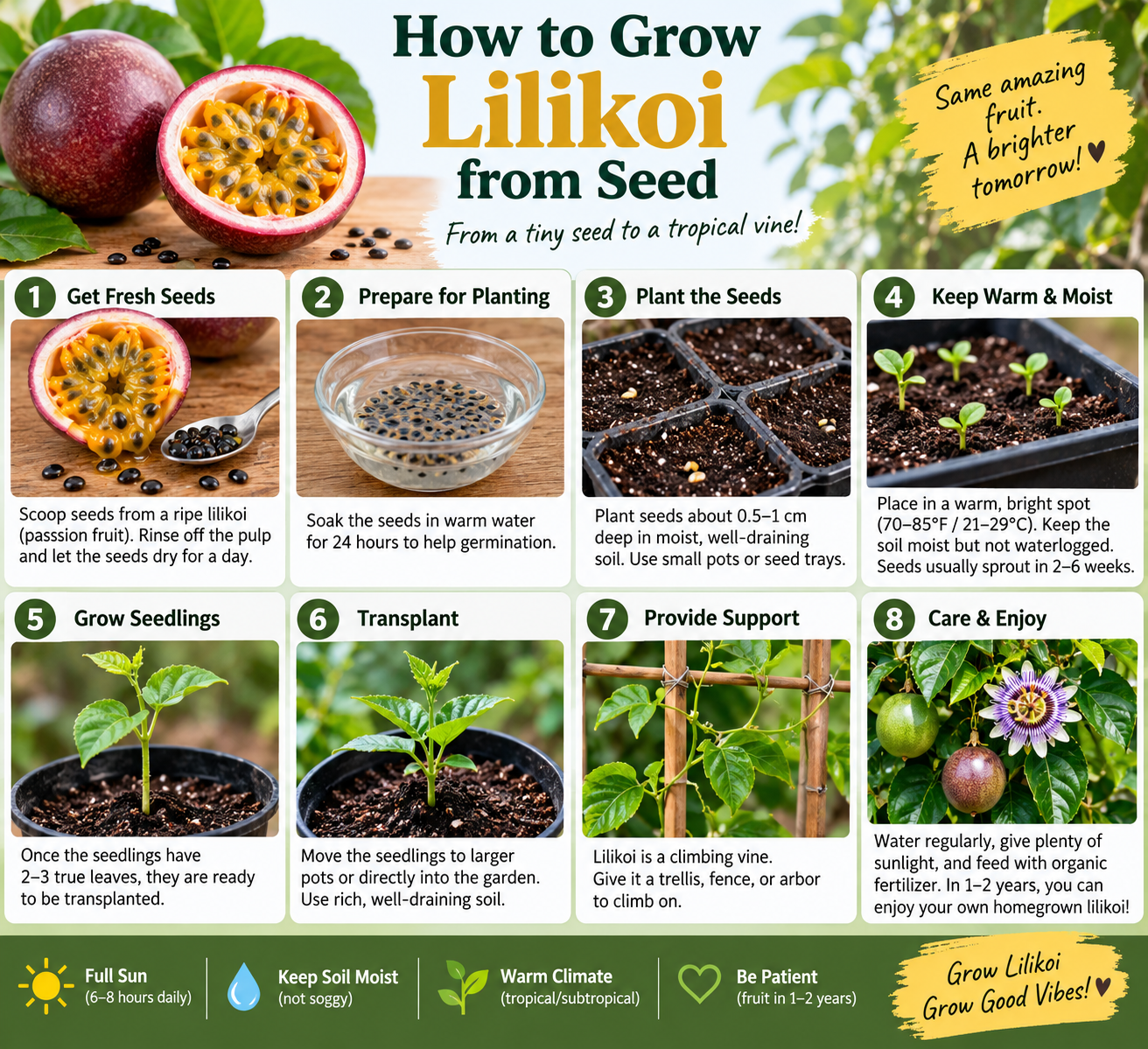
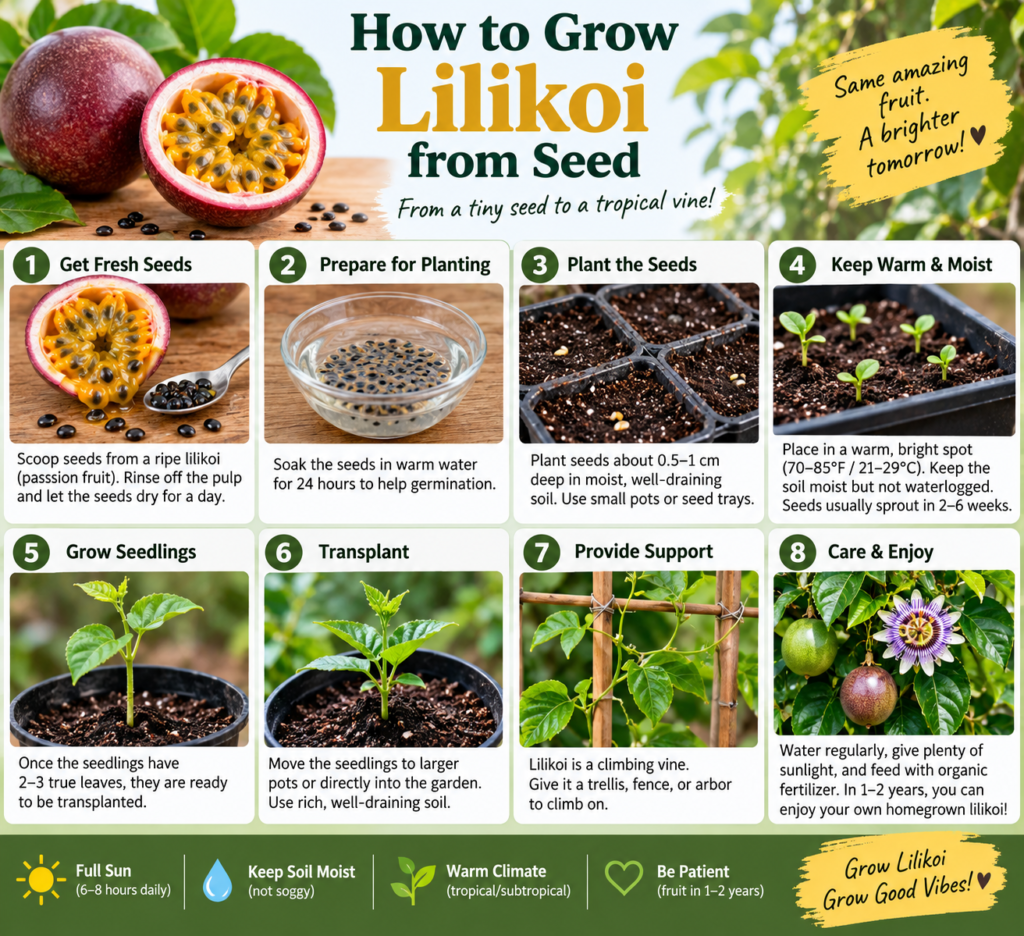
Growing passion fruit from scratch requires proper warmth, seed prep, and patience. To successfully grow lilikoi from seed, harvest fresh seeds from a ripe fruit, clean off the gelatinous pulp, soak them in warm water for 24 hours, and plant them in moist, well-draining soil at 70°F to 85°F (21°C to 29°C).
Most home gardeners fail with tropical vines because they buy dried, low-viability seed packets or miss critical germination windows. If you want a thriving vine that yields abundant fruit—and you eventually want to learn how to juice lilikoi for fresh beverages—starting with fresh, high-quality seeds is the non-negotiable first step.
Why Lilikoi Branding and Cultivation Share the Same Core Principles
In the world of brand architecture and domain strategy, names like Lilikoi carry immense sensory weight. The word itself relies on soft liquid consonants (“L”) and bright vowels (“I”), giving it an airy, tropical, and premium aesthetic.
Just as a brand needs clear positioning to scale, a lilikoi vine needs the right foundation to fruit.
Quick Cultivation Profiles
- Yellow Lilikoi (Passiflora edulis f. flavicarpa) | Tangy, vigorous, tropical | Best for warm lowland climates and high-yield juicing.
- Purple Passion Fruit (Passiflora edulis) | Sweet, aromatic, compact | Best for cooler subtropical areas and fresh eating.
- Jamaican Lilikoi (Passiflora laurifolia) | Mild, floral, delicate | Best for specialty gardens and niche culinary uses.
Seed Preparation and Germination Mechanics
Freshness dictates your success rate. Dried passion fruit seeds enter a deep dormancy phase that can take up to 90 days to break, whereas fresh seeds usually germinate within 14 to 21 days.
Here’s the step-by-step process:
- Extract and Clean: Scoop out the pulp from a ripe, slightly wrinkled lilikoi. Place the pulp in a mesh strainer and gently rub it against the wire to strip away the aril (the juice sac surrounding the seed).
- Scarify slightly: Lightly rub the seeds between two sheets of fine-grit sandpaper. This gently thins the hard outer seed coat without damaging the internal embryo.
- Soak: Submerge the seeds in warm water or warm milk for 24 hours. The enzymes in milk help break down remaining seed inhibitors.
- Sow: Plant seeds 1/4-inch deep in a sterile seed-starting mix composed of equal parts peat moss, perlite, and coarse sand.
- Heat and Moisture: Cover the tray with a plastic dome and place it on a heat mat set to 80°F (27°C). Keep the medium consistently damp, never waterlogged.
Ripe Lilikoi Harvest
➔
Slice Halves
➔
Pulse Scoop in Blender
Low Speed
➔
Strain Pulp
➔
Pure Juice
To know how to juice lilikoi efficiently without crushing the black seeds into your juice:
- Slice and Scoop: Cut the fruit in half and scoop the pulp and seeds into a blender.
- Pulse, Don’t Blend: Use the pulse setting on low speed for 5 to 10 seconds. You only want to detach the juice sacs from the seeds, not pulverize the seeds themselves.
- Filter: Pour the mixture through a fine-mesh sieve or cheesecloth into a glass pitcher. Press gently with a silicone spatula to extract all the liquid.
Pure lilikoi juice is highly concentrated and tart. Dilute it with water, blend it into smoothies, or combine it with simple syrup to create a classic Hawaiian passion fruit base.
Lilikoi Cultivation & Processing Matrix
| Stage | Key Metric / Requirement | Pro-Tip / Potential Pitfall |
| Germination | 75°F – 85°F soil temperature | Use fresh seeds; dried seeds take months to sprout. |
| Soil & Drainage | pH 6.0 – 6.5, sandy loam | Avoid heavy clay; wet roots lead to fungal rot. |
| Trellising | Heavy-duty wire or wood lattice | Vines grow rapidly and can collapse lightweight structures. |
| Juicing | Low-speed pulsing only | High-speed blending crushes seeds, adding bitter tannins. |
Common Pitfalls When Growing and Using Lilikoi
- Planting in Poorly Draining Soil: Passiflora species are extremely prone to root rot (Fusarium wilt). Always use well-draining soil amended with organic matter.
- Over-Fertilizing with Nitrogen: High nitrogen levels produce lush green foliage but zero flowers and fruit. Switch to a potassium- and phosphorus-rich fertilizer once the vine is established.
- Shallow Pots: Lilikoi vines have expansive root systems. If growing in a container, start with at least a 15- to 20-gallon pot.
- Harvesting Too Early: Never pick lilikoi off the vine while it’s green. Wait until the fruit turns fully yellow or purple and drops to the ground naturally.
Strategic Framework for Planting to Harvest
1
<div style="flex:1;padding:18px 22px;background:#f7f1ff;border-left:5px solid #6b4aa0;border-radius:10px;">
  <strong style="font-size:18px;color:#3d285d;">Phase 1: Seed Prep</strong>
  <div style="margin-top:6px;color:#555;">24h Soak</div>
</div>
↓
2
<div style="flex:1;padding:18px 22px;background:#f2f9f1;border-left:5px solid #5b8c5a;border-radius:10px;">
  <strong style="font-size:18px;color:#315a31;">Phase 2: Sprouting</strong>
  <div style="margin-top:6px;color:#555;">2–4 Weeks under Heat</div>
</div>
↓
3
<div style="flex:1;padding:18px 22px;background:#fff7e9;border-left:5px solid #d28a32;border-radius:10px;">
  <strong style="font-size:18px;color:#7a4d16;">Phase 3: Trellis Training</strong>
  <div style="margin-top:6px;color:#555;">Months 2–6</div>
</div>
↓
4
<div style="flex:1;padding:18px 22px;background:#fff1f7;border-left:5px solid #9b4d7d;border-radius:10px;">
  <strong style="font-size:18px;color:#713554;">Phase 4: Harvesting & Juicing</strong>
  <div style="margin-top:6px;color:#555;">Months 9–12</div>
</div>
- Start Indoors: Begin seeds in early spring using seedling trays and heat mats.
- Harden Off: Gradually expose young seedlings to direct outdoor sunlight over a period of 10 days once all risk of frost has passed.
- Install Support Early: Build a sturdy 6-foot trellis system at the time of transplanting so the tendrils have an immediate climbing surface.
- Prune Annually: Prune back main stems by one-third in early spring to encourage new growth, which is where flowers and fruit develop.
Frequently Asked Questions
How long does it take to grow lilikoi from seed to fruit?
Under optimal tropical or subtropical conditions, a lilikoi vine grown from seed will bloom and set fruit in 9 to 12 months. In cooler climates, it may take up to 18 months.
Can you grow lilikoi indoors?
Yes, provided it receives at least 6 to 8 hours of direct bright light daily from a south-facing window or a high-powered LED grow light. Indoor plants require manual hand-pollination of flowers to produce fruit.
What is the best way to extract lilikoi juice without a blender?
Put the pulp into a fine mesh strainer over a bowl and press it with the back of a ladle or spoon. This cleanly separates the aromatic yellow juice from the seeds without any risk of seed breakage.
The Golden Rule of Growing Lilikoi
Fresh seeds and heat drive germination, but consistent support and drainage deliver the fruit. Keep the roots dry, the canopy supported, and the processing simple.
